
RECORDING DEVICE PROTECTIVE OPTICS
Dash Cam & Body Camera Protective Lens Manufacturing
Custom protective cover lenses for dash cams and body-worn cameras — why sustained cabin heat and drop-impact survival, not optical resolution, are what actually separate a lens that lasts from one that fails in the field.
By: ATRMOLD Engineering Team
September 2026
Reading time: 12min
Category: Recording Device Optics
- What These Two Devices Have in Common: A Harsh Mount, Not Harsh Optics
- Dash Cam Cover Lens: Surviving Cabin Heat Without Separating from the Housing
- Body Camera Cover Lens: MIL-STD-810G Shock, Vibration & IP67 Sealing
- The IP Rating Landscape: Retail vs. Fleet vs. Law Enforcement Grade
- Material Selection for Impact, Thermal, and Optical Clarity Together
- Where Our Capability Stops: The Imaging Lens Inside the Camera
- Custom Molded Cover Lens vs. Off-the-Shelf Optic
- From DFM to Cleanroom Molding
- Supplier Sourcing Checklist
- Frequently Asked Questions
A dash cam exposed to direct summer sunlight on a dashboard and a body camera subjected to impact during field use may not appear to present related sourcing challenges. They are. Both devices position their camera modules behind a protective cover lens that must withstand environmental conditions far harsher than those experienced by the imaging sensor behind it — and in both cases, cover lens failure can be a more significant field reliability issue than sensor failure.
This guide covers what actually determines protective cover lens survival for dash cams and body-worn cameras: the thermal extremes of a parked-car dashboard, the shock and vibration standards body cameras are commonly tested against, and the sealing requirements that separate a retail-grade device from a fleet or law-enforcement-grade one.
Scope note: This guide covers the protective cover lens — the outward-facing sealing component over the camera module — not the imaging lens elements that form the actual image inside the module. That’s a distinct precision imaging optics discipline. See Section 6 for more on this boundary.
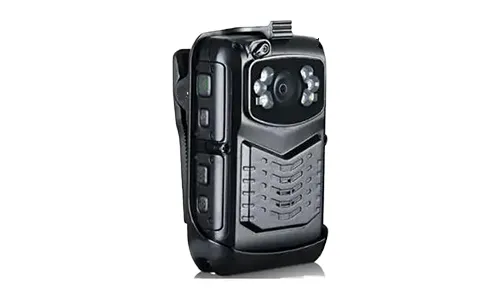
1. What These Two Devices Have in Common: A Harsh Mount, Not Harsh Optics
Neither a dash cam nor a body camera necessarily requires highly specialized imaging optics — both typically use compact imaging sensors and lens assemblies designed for their intended field of view and image-quality requirements. What makes sourcing the cover lens different is the mounting environment: a dash cam sits behind glass in a space that can reach extreme temperatures on a parked, sun-exposed dashboard, while a body camera rides on a moving person through drops, impacts, sweat, and weather exposure most consumer electronics never see.
2. Dash Cam Cover Lens: Surviving Cabin Heat Without Separating from the Housing
Dashboard-mounted electronics face significant thermal exposure: adhesive mounts can soften and lose bond strength above roughly 60–70°C, a temperature range that parked vehicle interiors can reach regularly in hot climates. At these temperatures, the cover lens faces a related but distinct risk: differential thermal expansion between the lens material and its housing, which in poorly specified designs can cause optical distortion or, in severe cases, separation of the lens from the housing.
Why this matters for material and tolerance specification: A cover lens that fits perfectly at room temperature but expands at a different rate than its housing across a 60–80°C swing needs that thermal mismatch engineered around from the start — through material selection, fit tolerance, or a housing design that accommodates the differential — not discovered after field returns start coming in from a hot climate market.
3. Body Camera Cover Lens: MIL-STD-810G Shock, Vibration & IP67 Sealing
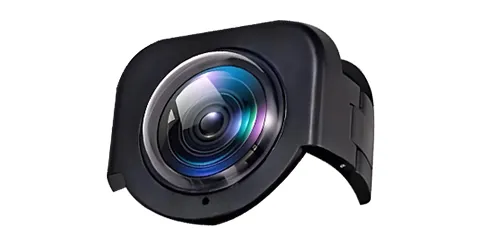
Law enforcement and security-grade body cameras are commonly validated against MIL-STD-810G, the U.S. military environmental durability standard — specifically Method 516.6 for transit drop testing and Method 514.6 for vibration — alongside an IP67 rating for dust and water sealing. These aren’t marketing badges; they reflect the real physical stress a device worn on a moving person, potentially through a physical altercation, is expected to survive without losing function.
For the cover lens specifically, this means impact resistance and seal integrity have to be engineered together: a lens that survives a drop test but compromises the housing seal on impact defeats the purpose of both specifications being tested in the first place.
4. The IP Rating Landscape: Retail vs. Fleet vs. Law Enforcement Grade
Confirming which tier your program actually needs — before specifying the cover lens — avoids both under-engineering a fleet-grade product and over-engineering a retail one.
5. Material Selection for Impact, Thermal, and Optical Clarity Together
Impact-resistant optical PC is the standard base material for both device types, chosen over PMMA’s marginally better clarity because of the drop and impact exposure both categories face. For dash cams specifically, UV-stabilized grades matter given prolonged exposure to direct sunlight through a windshield; for body cameras, scratch resistance and a hydrophobic or anti-smudge coating help maintain clarity given frequent handling and cleaning in the field.
6. Where Our Capability Stops: The Imaging Lens Inside the Camera
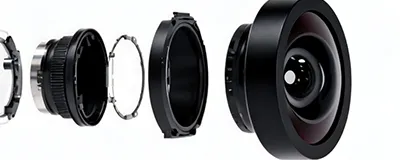
As with the other recording and sensing devices covered in our guides to access control terminal optics and action camera housing lens manufacturing, the cover lens sealing a camera module from the environment is a fundamentally different manufacturing problem than the multi-element imaging lens forming the actual image inside that module — a precision imaging optics discipline requiring MTF validation and aberration correction, outside our current scope.
7. Custom Molded Cover Lens vs. Off-the-Shelf Optic
Off-the-Shelf Cover Lens
- Faster initial sourcing for early prototyping
- Generic fit that may not seal correctly against your specific housing
- No thermal expansion engineering for your target climate
- Material not validated against your specific drop/vibration spec
Custom Molded Cover Lens
- Fit and seal engineered around your specific housing geometry
- Thermal expansion accounted for against your target operating range
- Material and impact resistance matched to your drop/vibration standard
- Unit cost improves significantly at production device volumes
8. From DFM to Cleanroom Molding
DFM Review for Seal and Impact Performance. Drawings are reviewed through optical design engineering analysis for housing fit, thermal expansion tolerance, and gate placement before tooling begins.
Precision Mold Construction. Cavities are built through precision mold manufacturing, with seal-interface and dimensional tolerances verified before production release.
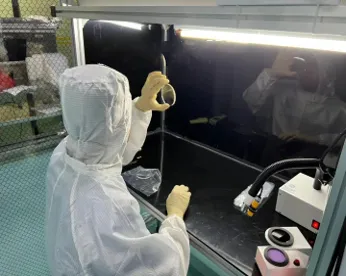
Cleanroom Molding. Production runs within a controlled cleanroom, consistent with our broader optical lens injection molding process.
Cpk-Tracked Verification. Optical-critical and seal-critical dimensions are tracked with production Cpk data, following the approach in our optical lens quality control and metrology guide.
9. Supplier Sourcing Checklist
9.1 Can you engineer the lens-to-housing fit for our specific target operating temperature range?
9.2 What impact and drop-test data can you provide relevant to MIL-STD-810G or comparable standards?
9.3 Can you validate IP-rated sealing after impact testing, not only in a static bench test?
9.4 What UV-stabilized or scratch-resistant material grades do you offer?
9.5 Do you track Cpk data on the optical and seal-critical dimensions specific to this application?
9.6 What cleanroom class do you produce in?
Frequently Asked Questions
Why do dash cam lenses fail in hot climates?
The most common failure mode is differential thermal expansion between the lens and its housing as dashboard temperatures climb — parked vehicle interiors regularly exceed 60–70°C in hot, sunny conditions. This can show up as visible barrel distortion in footage or, in severe cases, the lens separating from the housing. Material selection and fit tolerance need to account for this temperature range from the design stage.
What standards should a body camera cover lens meet?
Law enforcement and security-grade body cameras are commonly validated against MIL-STD-810G, particularly Method 516.6 for drop testing and Method 514.6 for vibration, combined with an IP67 rating for dust and water sealing. These reflect the physical stress of being worn on a moving person through drops and impacts.
What IP rating do I need for my recording device?
Retail consumer dash cams mounted inside a vehicle cabin typically use IP54/IP55. Fleet or exterior-mounted commercial dash cams generally need IP67, sometimes IP69 for washdown environments. Law enforcement body cameras typically require IP67 combined with MIL-STD-810G shock and vibration testing.
Do you manufacture the imaging lens inside a dash cam or body camera?
No. We manufacture the protective cover lens that seals and protects the camera module from the environment. The imaging lens elements that form the actual image inside the module are a distinct precision imaging optics discipline outside our current scope.
What production volumes are typical for custom cover lens tooling?
Prototype and validation batches are typically produced in the hundreds of units for thermal, drop, and sealing testing before committing to full production tooling. Unit costs improve significantly at production device volumes compared to prototype-stage runs.
A dash cam or body camera lives or dies on whether its cover lens survives the environment it’s actually deployed in — sustained dashboard heat in one case, drop-and-impact exposure in the other. Getting the thermal expansion, impact resistance, and sealing right, and being clear that this is a different discipline from the imaging optics inside the module, is what separates a device that holds up in the field from one that looks fine on the spec sheet and fails within a season. If you’re specifying cover lens tooling for a new recording device program, the questions in Section 9 are worth working through before committing budget.
Sourcing a Custom Dash Cam or Body Camera Cover Lens?
Talk to our optical engineering team about thermal-expansion-matched fit, impact-rated material selection, and IP67 sealing for your recording device program.
ATRMOLD — Precision Optical Lens Injection Molding & Mold Manufacturing
One comment
Comments are closed.
[…] with the other recording and sensing devices covered in our guides to dash cam and body camera cover lenses and action camera housing lens manufacturing, the cover lens sealing a drone or robot vision module […]