

CUSTOM OPTICAL LENS MANUFACTURING FOR INDUSTRIAL SENSING & AUTOMATION
Industrial & Sensor Optical Lenses:
Consistent Optical Performance.
Production-Ready Manufacturing.
Inconsistent focal length, surface contamination, and batch-to-batch variation are the three most common causes of sensor lens failure in production.
We eliminate all three via precise mold design, cleanroom molding, and 100% inspection.
- ISO 9001 Certified|100% Optical Inspection
- In-House Mold Design|20+ Years Tooling Expertise
- Specialized Hard Coating & AR Coating Capabilities
3,000+
Lens Part Numbers Produced
20+
Years in Optical Manufacturing
50+
Countries Served
98%+
On-Time Delivery Rate
What Are Industrial Sensor Optical Lenses — And Why Does Manufacturing Precision Matter?
What Are Industrial Sensor Optical Lenses — And Why Does Manufacturing Precision Matter?
Industrial sensor lenses are precision optical components utilized in photoelectric sensors, fiber optic transmitters, machine vision systems, and automated detection equipment. They collimate, focus, or distribute light with repeatable accuracy, ensuring reliable object detection, distance measurement, and signal transmission across demanding production environments.
The distinction between a reliable sensor lens and a defective one rests on manufacturing consistency rather than the theoretical design. It depends entirely on production execution: maintaining tight tolerances on optical surface geometry within the mold cavity, stabilizing process parameters across millions of cycles, and producing components in an environment that prevents contamination from degrading optical clarity.
🎯
Collimation Accuracy
Precise focal length control ensures stable light emission and reception. Tolerance: ±0.5% standard, ±0.2% precision grade.
🌡️
Thermal Stability
Optical-grade PMMA and PC maintain dimensional stability across operating temperatures from -40°C to 85°C.
🔄
Batch Consistency
Multi-cavity mold design and statistical process control (SPC) monitoring deliver uniform optical performance from initial samples to multi-million piece production runs.
⚙️
Full Custom Capability
Convex, Fresnel, and aspheric profiles. We manufacture from your existing technical drawings or develop custom geometry based on your application parameters.
Sensor Lens Products We Manufacture: Specifications at a Glance
All lenses available in custom dimensions, focal lengths, surface profiles, and coating options.
| Product Type | Material | Diameter | Focal Length | Wavelength | Key Application |
|---|---|---|---|---|---|
| Photoelectric Sensor Lens | PMMA / PC | 3–30mm | 5–100mm | 650/850/950nm | Conveyor detection, parts counting |
| Fiber Optic Sensor Lens | PMMA | 1–5mm | 2–10mm | 650/850nm | Proximity sensing, liquid level |
| PIR Infrared Fresnel Lens | HDPE / PMMA | 20–60mm | 8–15mm | 8–14μm | Motion detection, security systems |
| Machine Vision Lens | PMMA / COP | 5–25mm | 10–80mm | 400–900nm | Defect inspection, metrology |
| Laser / LiDAR Lens | PMMA / Glass | 5–30mm | 15–200mm | 905/1550nm | AGV guidance, robotic sensing |
| Scanner & Reader Lens | PMMA / PC | 8–20mm | 10–50mm | 630–680nm | Barcode, QR, document scanning |

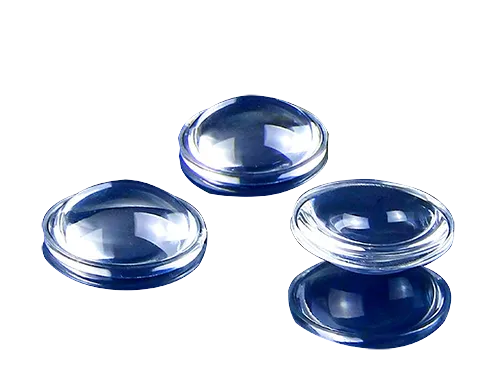
Photoelectric Sensor Lens
Collimating and focusing lenses for through-beam, retroreflective, and diffuse sensors. Optimized for 650nm, 850nm, and 950nm wavelengths.
3–30mm | ±0.5% FL | PMMA / PC | SPI A1
Conveyor · Packaging · Assembly · Presence detection
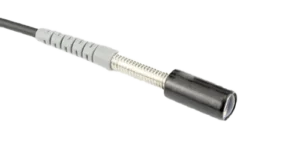
Fiber Optic Sensor Lens
Micro-precision lenses for fiber optic transmitter and receiver heads. Centration ≤0.02mm, Ra ≤1nm for maximum coupling efficiency.
1–5mm ≤0.02mm centration PMMA
Proximity · Liquid level · High-speed counting
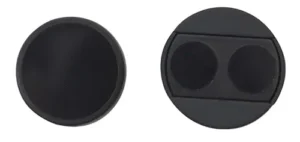
PIR Infrared Fresnel Lens
Multi-zone Fresnel arrays for PIR motion detection. Custom zone counts, detection angles, and focal distances matched to your sensor specifications.
HDPE / PMMA | >90% transmittance | Custom angle
Security · Automated lighting · Smart home systems

Machine Vision Lens
Aspheric and compound optical components for industrial cameras. Low distortion (<0.1%) across visible and near-infrared spectrums
400–900nm | PMMA / COP
Defect inspection · Metrology · Robot guidance

Laser & LiDAR Optical Lens
Collimating and beam-shaping lenses for laser distance sensors and LiDAR systems. 905nm and 1550nm wavelength options with optional anti-reflective (AR) coatings.
905 / 1550nm | PMMA / Glass | AR coating
AGV · Obstacle detection · Safety scanners

Scanner & Barcode Reader Lens
Compact imaging lenses for handheld and fixed-mount barcode and QR code scanners. Available with scratch-resistant hard coatings.
10–50mm FL | 40°–90° FOV | HC coating
Logistics · Retail POS · Track-and-trace systems
Which Material Is Right for Your Sensor Lens?
Choosing the right optical resin is the first critical decision in any sensor lens project.
Quick Selection Guide— Material Identification:
PMMA
PC (Polycarbonate)
COP / COC
From Inquiry to Mass Production:
Our Sensor Lens Manufacturing Process
Six structured steps engineered to mitigate development risk and guarantee optical consistency.
01
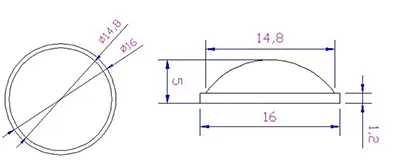
Application & Requirements Review
Submit your 2D drawings, 3D CAD data, or application specifications. Our engineering team reviews focal length, operating wavelength, and environmental constraints.
Technical response within 24 hours
02
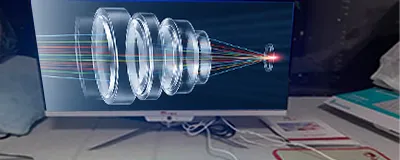
Optical Design & DFM Analysis
Ray-tracing simulations and Design for Manufacturability (DFM) reviews validate lens geometry before tooling fabrication begins, preventing costly tool modifications.
Completed in 3–5 business days
03
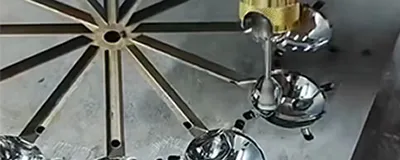
Precision Mold Development
Mirror-polished S136 / NAK80 steel tooling, ±0.001mm cavity tolerance, and SPI A1 surface finish. Full mold ownership is transferred to the customer.
5–7 weeks standard lead time
04

First Article Sampling
Cleanroom injection molding of initial sample runs. Provision of a comprehensive optical and dimensional inspection report covering focal length, transmittance, centration, and surface roughness (Ra).
100–500 pieces generated
05
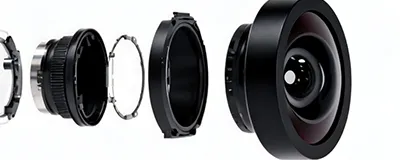
Validation & Approval
The customer evaluates samples within the target application. Free tool modifications are provided if first-article components do not meet agreed-upon specifications.
Turnaround: 2–3 weeks if required
06
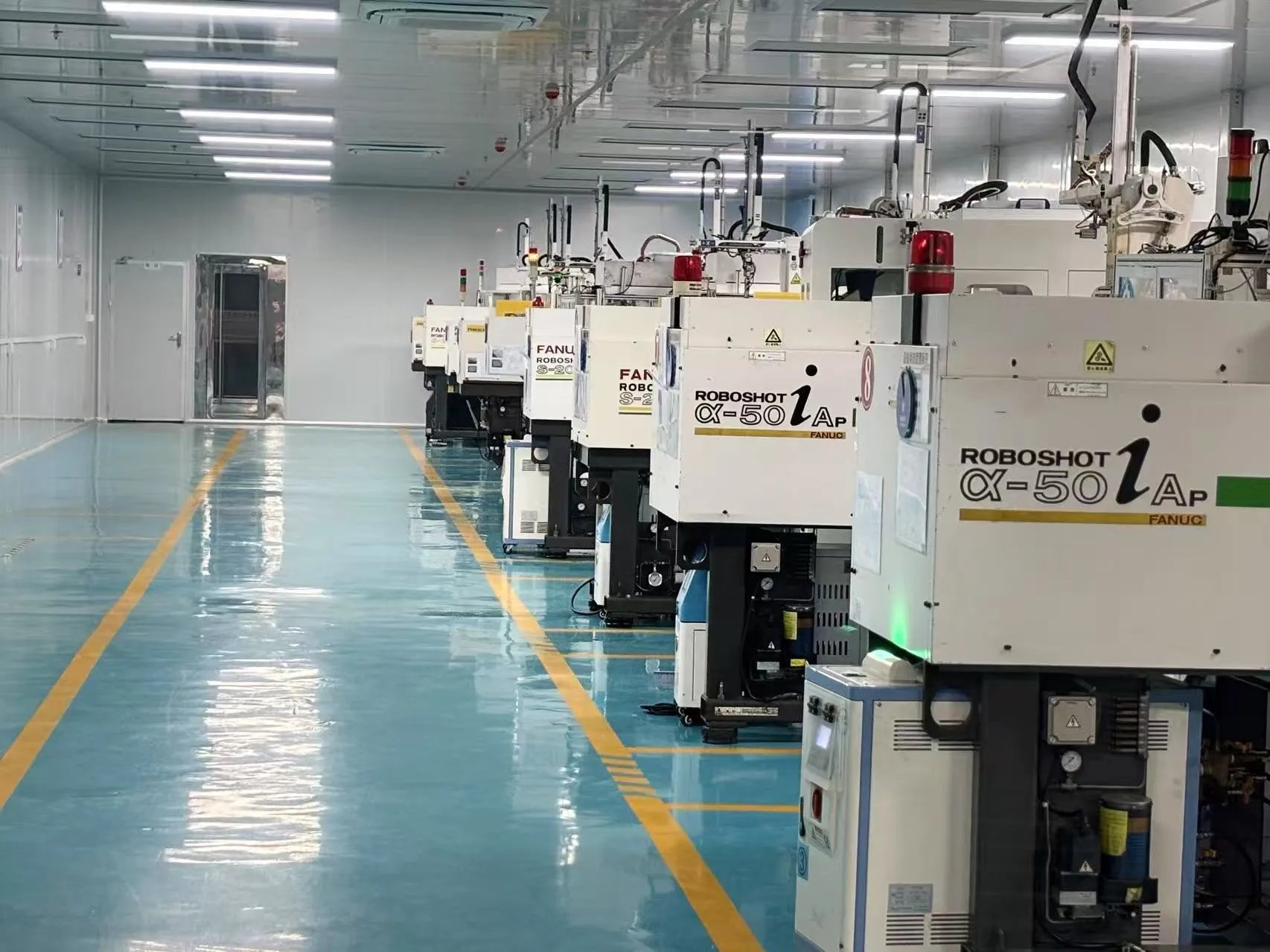
Mass Production & Delivery
Locked processing parameters, continuous SPC monitoring, and batch inspection documentation. Global air or sea freight with full lot traceability.
2–3 weeks from sample approval
Why Engineers and Procurement Teams Trust ATRMOLD
🏆
ISO 9001:2015 Certified
Quality management systems governing mold design, precision injection molding, optical metrology, and distribution. Certification available upon request.
🚗
Automotive-Grade Process Documentation
PPAP documentation, PFMEA, control plans, and Measurement Systems Analysis (MSA) available for automotive-grade programs.
✅
RoHS & REACH Compliant
All processing materials comply with EU environmental directives. Material compliance certification is provided with every shipment.
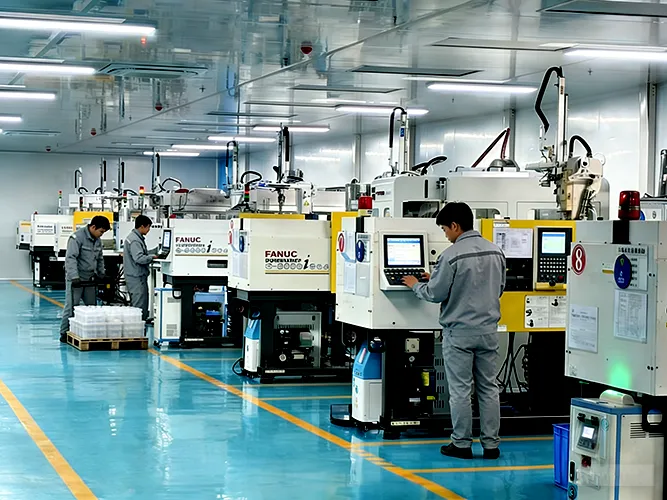
Class 10,000 Cleanroom Production
Optical lens injection molding in ISO Class 7 cleanroom. Minimizes particulate contamination — critical for sensor lenses where surface defects affect detection reliability.
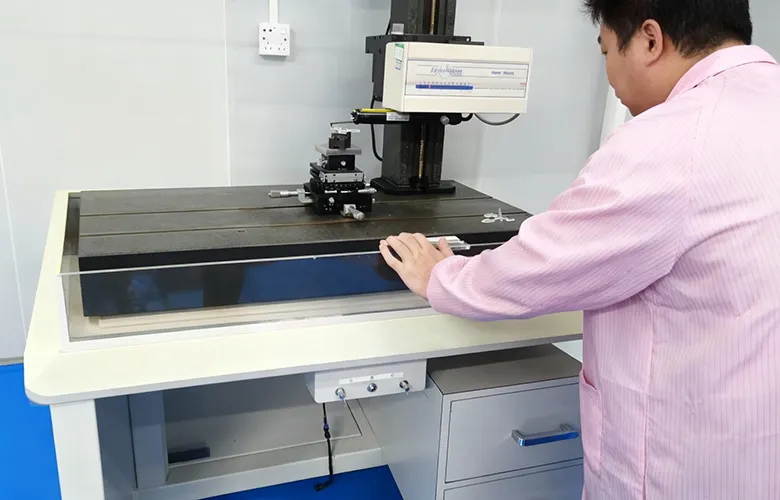
Full Optical Inspection Equipment
Zygo interferometer (λ/10 wavefront verification), Zeiss CMM (±0.0003mm precision), UV-Vis spectrophotometer, and a focal length optical bench (±0.2% measurement accuracy).
“We specified ±1% focal length tolerance for our 850nm through-beam sensor. ATRMOLD maintained ±0.4% focal length consistency across 50,000 pieces. Zero critical defects in 18 months of production.”
Marcus H.
Procurement Engineer — Automation Equipment Manufacturer, Germany
Industrial Sensor Lenses Across Six Key Application Areas
🏭
Factory Automation
Collimating lenses for 850nm through-beam sensors, 8–12mm diameter, with ±0.5% focal length tolerance. Used in conveyor lines, packaging machinery, and automated assembly systems.
🤖
Robotics & AGV Systems
Laser collimating and beam-shaping optics for AGV navigation and robotic obstacle detection. Available in 905nm and 1550nm optimized options.
🔒
Security & Access Control
PIR Fresnel lens arrays optimized for the 8–14μm range, alongside compact lenses for access control readers and beam-break intrusion detection hardware.
🏥
Medical & Laboratory
COP and COC optical elements for IVD flow cells and laboratory automation systems. ISO 10993 biocompatible material grades supplied.
📦
Logistics & Warehousing
Imaging optics for fixed-mount and handheld barcode readers. Designed for wide field angles, high scratch resistance, and integrated AR coatings.
🏢
Smart Building & Infrastructure
PIR occupancy lenses for automated lighting and HVAC control, alongside beam-break optics for elevator safety mechanisms and automated door systems.
Frequently Asked Questions About Industrial Sensor Lens Manufacturing
What is the MOQ for custom sensor lenses?
Can you manufacture lenses from our existing drawings?
How long does mold development take?
What wavelengths do your sensor lenses support?
Do you offer anti-reflective (AR) coating for sensor lenses?
Can you support automotive or medical quality requirements?
What happens if first article samples don’t meet spec?
Related Services & Products
Three Ways to Start Your Sensor Lens Project
Whether you have finalized engineering drawings or preliminary application requirements, our engineering team is ready to assist. No upfront minimum commitment is required to begin technical consultations.
Send Your Drawing
Have a 2D print, 3D CAD file, or physical sample? Submit it for an engineering DFM review and an indicative quotation within 24 hours.
Describe Your Application
No engineering files yet? Specify your application, wavelength, focal length, and production volume. We will propose a feasible optical configuration.
WhatsApp Direct
Need immediate technical support? Contact our engineering team directly for fast feasibility checks and project parameter reviews.
✓
Free DFM review included
✓
Quotation within 24 hours
✓
No commitment required to start