
MICROMOBILITY LIGHTING OPTICS
E-Bike & E-Scooter Lamp Lens Manufacturing: Regulatory & Design Guide
Custom headlight, taillight, and turn signal lens manufacturing for e-bikes, e-scooters, and electric motorcycles — why the regulatory classification of your vehicle, not just its lumen output, determines what the lens actually needs to be engineered against.
By: ATRMOLD Engineering Team
August 2026
Reading time: 13min
Category: Automotive & Mobility Optics
- Why Two-Wheeler Lamp Lenses Are a Different Sourcing Problem Than Automotive
- The Regulatory Patchwork: EN 15194, ECE R113/R74, and No Requirement at All
- Vibration and Mechanical Durability Requirements
- Material Selection and IP67 Sealing
- Compact Form Factor: Design Constraints Unique to Two-Wheelers
- Custom Molded Lens vs. Off-the-Shelf Two-Wheeler Optic
- From DFM to Cleanroom Molding
- Supplier Sourcing Checklist
- Frequently Asked Questions
An e-bike headlight lens and an automotive headlight lens both sit in front of an LED, both must survive years of outdoor exposure, and both are frequently grouped under “automotive lighting” by sourcing teams who haven’t examined the engineering distinctions. They shouldn’t be. A standard pedal-assist e-bike, a 45 km/h speed pedelec, and an electric moped can fall under entirely different regulatory frameworks, fundamentally changing how the optic must be validated before the vehicle is road-legal.
This guide covers what determines lamp lens requirements across the e-bike, e-scooter, and electric motorcycle categories: the regulatory classification that applies to your specific vehicle type, vibration and mechanical durability testing for handlebar- or frame-mounted lighting, and material and sealing requirements that differ significantly from passenger vehicle optics.
1. Why Two-Wheeler Lamp Lenses Are a Different Sourcing Problem Than Automotive
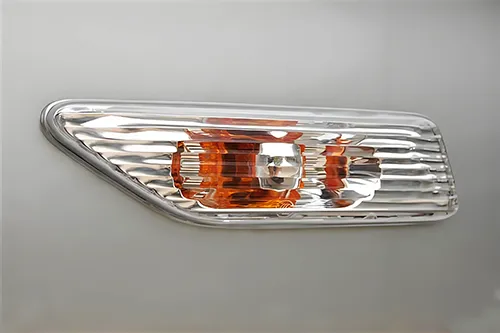
Our automotive optical lens sourcing guidance for passenger and commercial vehicles assumes a consistent regulatory baseline — DOT or ECE type approval applies across the board. Two-wheelers do not operate under a single regulatory framework. Depending on motor output, maximum assist speed, vehicle classification, and target market, the applicable lighting standard — or the absence of one — can vary significantly, making regulatory verification essential before finalizing lens tooling.
2. The Regulatory Patchwork: EN 15194, ECE R113/R74, and No Requirement at All
| Vehicle Class | Typical Regulatory Basis | Lighting Implication |
|---|---|---|
| Standard pedelec (EPAC, ≤250W, ≤25 km/h assist) | EN 15194 (EU) — harmonized under machinery regulation, not vehicle type approval | Lighting requirements are generally less prescriptive than full vehicle type approval; product-level safety still applies |
| Speed pedelec (up to ~45 km/h assist) | Falls under vehicle-type UNECE regulations in most EU markets | Headlamp typically expected to meet ECE R113 (Class B/C) with correct beam cutoff; installation per ECE R74 |
| E-scooter / e-moped (registered vehicle categories) | UNECE / national vehicle-type approval, varies by market | E-mark homologation commonly required on the lamp assembly itself |
| Electric motorcycle | Full UNECE / DOT vehicle-type approval, closest to passenger vehicle framework | Headlamp and signal lamp requirements comparable to passenger vehicle lighting |
Why this matters before tooling: A lens engineered and validated for a standard pedelec — where formal beam-pattern homologation may not be required — is not automatically suitable for a speed pedelec or e-scooter program subject to applicable UNECE beam-pattern and approval requirements. Confirming which vehicle category your product falls into within each target market must occur before optical design freeze.
3. Vibration and Mechanical Durability Requirements
Two-wheeler lamps are typically mounted directly to the handlebar, fork, or frame, exposing them to significantly higher vibration levels than lamp housings integrated into passenger vehicle body structures. Durability testing regimes for this category include:
- Vibration testing — simulating sustained road vibration transmitted directly through a rigid handlebar or frame mount, requiring a substantially more severe acceleration profile than isolated automotive housings.
- Thermal cycling and heat testing — verifying that the lens geometry and housing seal maintain structural integrity under LED junction heat combined with ambient environmental swings.
- Sealing and salt-spray testing — confirming IP-rated ingress protection is maintained after mechanical stress cycling and, in coastal or winter-salted environments, sustained corrosive exposure.
This combined thermal, vibration, and sealing test regime is closely linked to the process controls covered in our dimensional stability guide — a lens that undergoes dimensional drift under sustained vibration and thermal cycling risks seal failure at the gasket interface well before the LED source reaches end-of-life.
4. Material Selection and IP67 Sealing
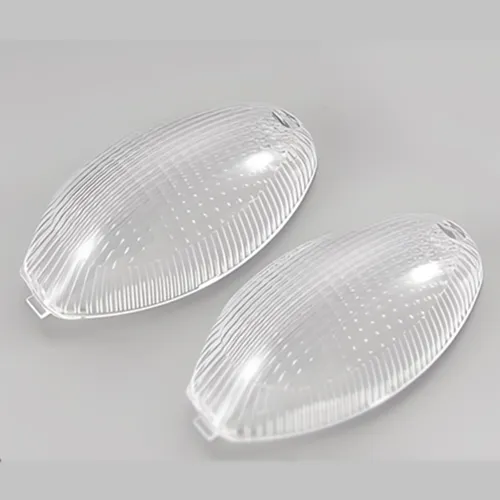
Impact-resistant optical-grade PC is a common material choice for two-wheeler lamp lenses, often preferred over PMMA despite PMMA’s slightly higher optical transmittance because of the severe mechanical impacts encountered in this category — including flying road debris, tip-overs, and, for shared e-scooters, aggressive handling during docking and fleet maintenance.
IP67 ingress protection is commonly specified for applications requiring resistance to rain, high-velocity road spray, and — for shared mobility fleets — high-pressure wash cycles during servicing. Lens-to-housing seal design must account for long-term dimensional consistency, as a lens that deforms slightly under dynamic vibration will compromise the perimeter gasket seal over time.
5. Compact Form Factor: Design Constraints Unique to Two-Wheelers
Two-wheeler lamps are typically far more compact than automotive equivalents — integrated into a handlebar stem, frame tube, or slim rear light bar rather than a dedicated body panel cutout. This compresses the same design challenges covered in our guide to LED lighting lens injection molding — TIR geometry, beam-cutoff accuracy, gate placement — into a significantly smaller footprint, which raises the same micro-molding tolerance discipline discussed in our optical lens tolerances guide.
6. Custom Molded Lens vs. Off-the-Shelf Two-Wheeler Optic
Off-the-Shelf Two-Wheeler Lens
- Faster initial sourcing for early prototyping
- Generic beam pattern, not validated against your specific market’s regulatory class
- Fixed mounting profile that may require housing rework
- No control over IP-rating validation specific to your assembly
Custom Molded Lamp Lens
- Beam-pattern geometry engineered to meet the requirements applicable to your target market and vehicle class s
- Mounting profile matched to your handlebar, fork, or frame housing
- Material and seal design evaluated against applicable vibration and ingress-protection requirements
- Unit cost typically improves as production volume increases
7. From DFM to Cleanroom Molding
DFM Review for Beam and Seal Performance. Part drawings undergo optical design engineering analysis to evaluate beam-cutoff geometry, gate placement, and gasket-seal housing interfaces prior to cutting tool steel.
Precision Mold Construction. Tooling cavities are produced via precision mold manufacturing, with critical mounting features and seal-interface tolerances verified before production release.
Cleanroom Molding. Injection molding is performed within a controlled cleanroom environment in accordance with our optical lens injection molding process.
Cpk-Tracked Verification. Optical-critical surface profiles and seal-critical dimensions are tracked using production Cpk data, following the methodology detailed in our optical lens quality control and metrology guide.
8. Supplier Sourcing Checklist
Can you confirm which regulatory class (EN 15194, ECE R113/R74, or none) applies to our specific vehicle type and target market?
Do you validate the required beam pattern against the applicable regulatory requirements before tooling?
What vibration, thermal cycling, and sealing test data can you provide for handlebar/frame-mounted lighting specifically?
Can you achieve IP67 sealing at our lens-to-housing interface, and validate it after vibration testing rather than only in a static test?
Can mounting geometry be matched to our compact handlebar, fork, or frame housing without rework?
Do you track Cpk data on the optical and seal-critical dimensions specific to this application?
Frequently Asked Questions
Do e-bike headlights need E-mark or ECE approval?
It depends on the vehicle classification. A standard pedelec (EPAC, up to 250W and 25 km/h pedal assistance) typically falls under EN 15194 rather than full vehicle-type lighting approval. Speed pedelecs (up to 45 km/h), e-scooters, and electric mopeds may fall under UNECE or applicable national vehicle-type regulations, where lamp approval requirements depend on the vehicle category and target market.
What’s the difference between sourcing a lamp lens for an e-bike versus a car?
Beyond the compact form factor, two-wheeler lamps are often mounted directly to a rigid handlebar, fork, or frame with limited vibration isolation, increasing mechanical durability and sealing demands. The applicable regulatory framework also varies by vehicle classification, unlike passenger cars which consistently adhere to established DOT or UNECE type approvals.
What IP rating should an e-scooter or e-bike lamp lens meet?
IP67 is commonly specified for applications requiring resistance to heavy rain, road spray, and pressure washing during commercial fleet maintenance. The seal design should be validated post-vibration testing rather than relying solely on static bench testing, as dynamic deflection can cause gasket leakage.
Do you provide E-mark or ECE homologation certification for the finished lamp?
No. We manufacture the precision optical lens component — optimizing material grade, beam-cutoff geometry, and dimensional tolerances — to meet the specifications required for your target regulatory class. Formal homologation and type approval of the finished lamp assembly and vehicle remain the responsibility of the OEM.
What production volumes are typical for custom two-wheeler lamp lens tooling?
Prototype and validation sampling runs may be produced in batches of several hundred units for photometric, vibration, and ingress-protection testing before full production release. Unit production costs scale down significantly at full manufacturing volumes.
Two-wheeler lamp lens sourcing can appear to be a smaller version of automotive lighting until regulatory classifications and real-world mounting environments are considered. A lens engineered without verifying the applicable regulatory requirements for the vehicle class — or without vibration and seal validation suited to a rigid frame mount — risks compliance issues and field failures that off-the-shelf optics may not address. If you are specifying lamp lens tooling for an e-bike, e-scooter, or electric motorcycle program, addressing the questions in Section 8 will help ensure a successful release.
Sourcing a Custom E-Bike or E-Scooter Lamp Lens?
Talk to our optical engineering team about regulatory-class beam design, vibration-validated sealing, and compact-format tooling for your two-wheeler lighting program.
ATRMOLD — Precision Optical Lens Injection Molding & Mold Manufacturing