
Most optical lens manufacturer guides focus on price and lead time. This guide focuses on the technical and contractual factors that determine whether your production remains stable in year three — not just whether your first samples pass inspection.
By: ATRMOLD Engineering Team
July 2026
Reading time: 13 min
Category: Sourcing Guide
- Why Evaluating an Optical Lens Manufacturer Is Different from Standard Injection Molding Sourcing
- Question 1: What cleanroom classification does your production facility hold?
- Question 2: Is coating done in-house or outsourced to a third-party vendor?
- Question 3: Who owns the mold — and what happens to it if we switch suppliers?
- Question 4: How do you protect our optical design and drawings from disclosure?
- Question 5: Can you provide Cpk data from a comparable production run?
- Question 6: Do you perform DFM review before tooling, or quote the design as drawn?
- Question 7: What certifications does your quality system hold — and are they current?
- Question 8: What does your mold maintenance and long-term support model look like?
- Supplier Evaluation Scorecard
People Also Ask
How do I find a reliable optical lens manufacturer in China?
Reliable optical lens manufacturers in China are identified not by price or minimum order quantity alone, but by the technical infrastructure they can demonstrate: verified cleanroom classification, in-house coating capability, documented mold ownership agreements, and process capability data (Cpk) from comparable production runs. These factors distinguish manufacturers that can produce acceptable first-article samples from those that can maintain consistent quality throughout a three-year production program. The evaluation process should take place before tooling begins — not after first articles reveal production issues. A structured set of technical and contractual questions, answered in writing before a tooling order is placed, provides the most reliable method for assessing manufacturer capability in optical lens injection molding.
1. Why Evaluating an Optical Lens Manufacturer Is Different from Standard Injection Molding Sourcing
Sourcing standard injection-molded plastic parts from China is a well-established process. Request quotations, review samples, audit the factory, verify certifications, and place the order. For general-purpose housings, connectors, or mechanical components, this sequence is typically sufficient.
For optical lens injection molding, this approach is not sufficient. Several factors make the evaluation criteria fundamentally different:
- The production environment matters, not just the process. A lens molded in an uncontrolled factory environment and one molded in an ISO Class 6 (Class 1,000) cleanroom can look identical on first-article inspection and perform very differently in long-term field use.
- The mold is your most significant capital asset in this relationship. An optical-grade mold costs $15,000–$80,000+ depending on complexity. Who owns it, where it lives, and what happens to it when you switch suppliers determines your negotiating leverage for the life of the product.
- Your optical design has IP value. Sharing lens geometry, tolerance specifications, and material grades with a manufacturer in China requires contractual protections that go beyond standard purchase order terms.
- First-article approval is not the same as production capability. A manufacturer who can produce 10 acceptable first-article samples may not have the process control (Cpk) to maintain that quality across 50,000 production units.
The eight questions below address these optical-lens-specific supplier evaluation criteria. They are designed to be submitted in writing before a tooling order is placed and to generate specific documented responses — not general capability statements.
The Tooling Lock-In Risk
A tolerance specification defines the acceptable limits of a dimension. A process capability index (Cpk) measures whether a production process can reliably manufacture within those limits across thousands of cycles under real-world factory conditions. Specifying tight tolerances without understanding the achievable Cpk in optical injection molding is the leading cause of costly tool rework after first article inspection (FAI).
Question 1: What cleanroom classification does your production facility hold?

What cleanroom classification does your production facility hold — and can you provide the most recent particle count test report?
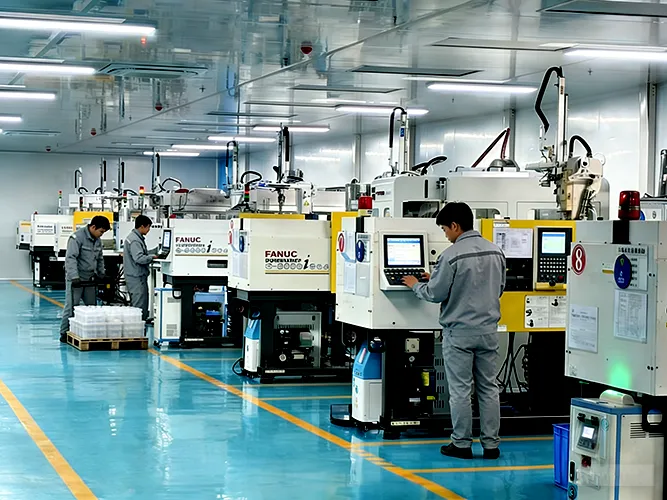
Cleanroom classification directly affects contamination risk during the most vulnerable phase of lens production — the period between mold opening and packaging, when optical surfaces are exposed to the production environment. Airborne particles that settle on a lens surface before packaging may be invisible during standard visual inspection but can appear as scatter and haze under actual application conditions.
ISO 14644-1 defines cleanroom classes by particle count per cubic meter. The two classifications relevant to optical lens production are ISO Class 6 (Class 1,000) — a maximum of 35,200 particles ≥ 0.5µm per cubic meter — and ISO Class 7 (Class 10,000) — a maximum of 352,000 particles per cubic meter. For precision optical lenses (sensor windows, medical imaging, camera optics), ISO Class 6 is the appropriate standard. ISO Class 7 is acceptable for less sensitive applications (LED optics, general illumination lenses).
Cleanroom certification is not self-declared. It requires periodic particle count testing by a qualified metrology service. A manufacturer that claims cleanroom capability but cannot provide a particle count test report from the last 12 months is not operating a verified cleanroom — only an enclosed production area with unverified cleanliness performance.
ASK SPECIFICALLY
- What is the ISO class of your production cleanroom?
- When was the most recent particle count certification performed?
- Can you share the test report?
- Is injection molding and packaging both performed inside the cleanroom?
🚩RED FLAGS
- “We have cleanroom conditions” without a certification class
- Particle count test report more than 12 months old
- Molding in cleanroom, packaging outside
- ISO Class 8 (Class 100,000) presented as “cleanroom production”
People Also Ask
Do optical lenses need to be manufactured in a cleanroom?
Precision optical lenses intended for imaging, sensing, or medical applications should be manufactured in at minimum an ISO Class 7 (Class 10,000) cleanroom environment, with ISO Class 6 (Class 1,000) preferred for higher-specification applications. The cleanroom is required not only during injection molding but also during post-mold handling, coating application, and packaging — contamination can occur at any of these stages.
LED illumination optics and general-purpose optical components can be manufactured in ISO Class 8 (Class 100,000) or controlled factory environments with lower cleanliness requirements, provided the application does not involve precise imaging or sensing where particle contamination would appear as artifact in the output image or reduce detection signal.
Question 2: Is coating done in-house or outsourced to a third-party vendor?

Is optical coating — AR, hard coat, hydrophobic, anti-fog — applied in your own facility, or sent to a third-party coating vendor?
The coating step is where many otherwise capable optical lens manufacturers introduce a quality control gap. Vacuum-deposited thin-film coatings (AR, hard coat) require the substrate surface to be clean at the molecular level before coating begins. A lens that is molded in a cleanroom, then shipped to an external coating facility in an unsealed container, then cleaned and coated, then shipped back for inspection, has passed through a handling and contamination risk cycle that cannot be fully controlled by either party’s quality system.
AR delamination failures — where the coating peels or separates from the lens surface in the field, often after 6–18 months — are most commonly traced to contamination between molding and coating, not to defective coating chemistry. In-house coating eliminates this inter-process contamination window entirely.
ASK SPECIFICALLY
- Is coating performed in your own facility on your own equipment?
- What coating chamber type and vacuum level do you use?
- What is the process between mold ejection and coating chamber entry?
- If outsourced: who is the coating vendor, and how do you control quality at their facility?
✅STRONG RESPONSE
- All four coating types applied in-house in our own cleanroom facility
- Lenses move from mold to coating without cleanroom exit
- Coating chamber maintenance and process records available
- Pre-coating adhesion test and post-coating spectrophotometric verification on every lot
Question 3: Who owns the mold — and what happens to it if we switch suppliers?

Who legally owns the mold once it is built and paid for — and what are the terms for mold transfer if we move production?
Mold ownership is the single most important contractual question in an optical lens manufacturing relationship, and it is the one most often left ambiguous in early supplier discussions. In China’s manufacturing environment, the default position at many factories is that molds built on their premises remain on their premises — not legally, but practically. A mold that sits in a supplier’s toolroom and is used only by that supplier effectively belongs to that supplier, regardless of what the purchase order says.
A supplier who refuses to transfer a mold, delays transfer indefinitely, or demands additional payment for a mold that has been fully paid for has leverage precisely because mold transfer is inconvenient and expensive. The time to establish clear contractual terms about mold ownership, storage fees (there should be none for customer-owned molds), and transfer conditions is before the mold is cut — not when you are trying to switch suppliers because quality has declined.
ASK SPECIFICALLY
- Who holds legal title to the mold after full payment?
- Is mold ownership documented in the purchase agreement?
- Are there storage fees for customer-owned molds?
- What is the process and timeline for mold transfer if we choose to move production?
- Who is responsible for mold maintenance costs?
🚩RED FLAGS
- Vague answer: “the mold is yours, don’t worry”
- No written mold ownership clause in the purchase agreement
- Monthly storage fees applied to customer-owned molds
- Transfer timeline described as “we would need to discuss” rather than a defined process
What Good Mold Ownership Terms Look Like
The purchase agreement should explicitly state: (1) customer holds legal title to the mold upon full payment; (2) no storage fees apply to customer-owned molds in the supplier’s facility; (3) upon written request, the mold will be transferred to a specified location within [30/60] days; (4) the supplier will provide mold maintenance records and cavity measurement data with the transfer.
Question 4: How do you protect our optical design and drawings from disclosure?

How do you protect our lens designs, tolerance specifications, and material grades from disclosure to other customers or competitors?
An optical lens design — its surface geometry, tolerance specification, material selection, and coating stack — can represent significant R&D investment. When you send this information to a manufacturer for tooling and production, you are sharing the core of your optical product’s competitive differentiation. The engineering team at the manufacturer who reviews your DFM, the tool room that builds your mold, and the quality team that inspects your first articles all see information that, if disclosed to a competitor, could be replicated.
This risk is manageable with the right contractual and procedural controls — but only if those controls are established before drawings are shared. An NDA signed after a design has already been reviewed and the mold has been quoted provides far weaker protection than one signed before any project information is disclosed.
ASK SPECIFICALLY
- Do you execute a mutual NDA before reviewing any customer drawings?
- Who internally has access to customer design files — and is access logged?
- Are confidentiality obligations included in employee and subcontractor agreements?
- Have you ever been party to an IP dispute with a customer, and how was it resolved?
✅STRONG RESPONSE
- Mutual NDA signed before any customer files are reviewed
- Access to customer design files logged and restricted to the assigned project team
- Design files stored on isolated project servers, not shared network drives
- Willingness to accept customer-specific NDA terms in addition to standard agreement
People Also Ask
Is it safe to share optical lens designs with manufacturers in China?
Sharing optical lens designs with manufacturers in China carries IP risk that can be substantially reduced with the right contractual and procedural controls. The minimum protection is a signed mutual NDA before any design files are shared. Stronger protection includes restricted file access (only the assigned engineering team can view the customer’s files), contractual clauses specifying that design information cannot be used for any purpose other than the agreed project, and Chinese-law-governed NDA terms (which are more enforceable in Chinese courts than foreign-law NDAs).
Working with a manufacturer that has an established track record of long-term customer relationships — evidenced by customers who have worked with them for five or more years — is itself a meaningful proxy for IP trustworthiness. Manufacturers whose business model depends on repeat customer relationships have stronger incentives to protect IP than those that operate on a transaction-by-transaction basis.
Question 5: Can you provide Cpk data from a comparable production run?

Can you provide Cpk process capability data from a production run for a lens with similar tolerance requirements to ours?
Every optical lens manufacturer claims to achieve tight tolerances. The question is not whether they can meet specifications during a controlled first-article run of 10 parts — most manufacturers can achieve this under controlled conditions. The question is whether they can maintain Cpk ≥ 1.33 on critical dimensions throughout a 10,000- or 50,000-piece production run under normal machine variation, shift changes, and material lot transitions.
A manufacturer with a mature process control system will maintain SPC data from previous production runs and be willing to share Cpk reports (with customer-identifying information removed) as evidence of production capability. A manufacturer that only provides first-article approval reports — without continuous production SPC data — is demonstrating short-term capability under controlled conditions, not actual process performance over a full production run.
ASK SPECIFICALLY
- Can you share a Cpk report from a comparable precision optical lens production run?
- What CTQ dimensions do you monitor with SPC during production?
- What is your process for responding when a dimension trends toward its control limit?
- Do you use all-electric injection machines with closed-loop control?
🚩RED FLAGS
- Only offers first-article inspection report, no production SPC data
- Cannot explain what Cpk means or how it is calculated
- Uses hydraulic injection machines for precision optical production
- “We inspect every part” as substitute for process control — 100% inspection catches defects; it doesn’t prevent them
Question 6: Do you perform DFM review before tooling, or quote the design as drawn?

When we send you a lens design for quoting, do you provide a written DFM review before tooling begins — or do you quote the design as drawn?
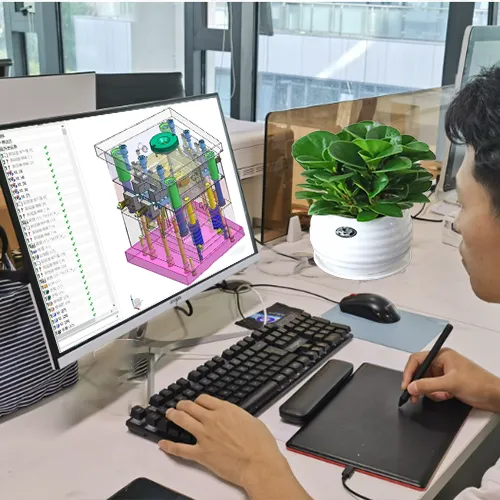
This question separates optical lens manufacturers into two categories. Manufacturers focused primarily on production volume will quote your design as provided and begin tooling as quickly as possible after receiving the purchase order. Manufacturers focused on long-term customer relationships will review your design for manufacturability before steel cutting — identifying gate placement risks, achievable tolerances, material drying requirements, and mold flow issues that, if unaddressed, may result in first-article failures or early production problems.
The DFM review typically adds 1–2 weeks to the initial project phase. It typically prevents 2–4 weeks (or more) of mold rework after first articles. The project timeline and cost impact consistently justify upfront DFM. A manufacturer that skips this step to achieve a faster start date is prioritizing internal production timing over project success.
ASK SPECIFICALLY
- Do you provide a written DFM report before tooling begins?
- What specific optical lens risks does your DFM cover (gate placement, birefringence, tolerance stack-up)?
- Do you run mold-flow simulation before the mold design is finalized?
- Can you share an example DFM report from a previous project?
✅STRONG RESPONSE
- Written DFM report provided with every tooling quotation
- Report identifies gate placement risks, birefringence exposure, tolerance achievability
- Mold-flow simulation results included for fill, weld line, and cooling analysis
- DFM findings reviewed with customer before steel is cut
People Also Ask
What should I check before placing a tooling order with a Chinese optical lens factory?
Before placing a tooling order with a Chinese optical lens manufacturer, verify the following: (1) Cleanroom certification with a particle count test report dated within the last 12 months; (2) In-house coating capability if AR or hard coating is in your specification; (3) Written mold ownership terms in the purchase agreement; (4) Signed NDA before design files are shared; (5) Cpk data from a comparable production run; (6) DFM review process before tooling begins; (7) ISO 9001 certification at minimum, ISO 13485 for medical applications; (8) Clear mold maintenance and long-term support terms.
Request confirmation of all these items in writing before signing. A manufacturer that responds clearly and specifically to all eight points in writing demonstrates the documentation discipline required for reliable long-term production quality.
Question 7: What certifications does your quality system hold — and are they current?

What quality management certifications does your facility hold — and can you provide the current certificate with audit date?
Certifications are not proof of product quality — they demonstrate that documented processes are established and maintained. A manufacturer with ISO 9001 certification has demonstrated to an accredited auditor that their quality management system is documented, followed, and periodically reviewed. This provides a meaningful distinction from manufacturers without certification, even when both claim similar capabilities. Certifications also establish baseline expectations for the production documentation you can receive with your orders.
The relevant certifications for optical lens injection molding include ISO 9001:2015 (general quality management — minimum baseline), ISO 13485 (medical device manufacturing — required when the lens is used in a medical device), and IATF 16949 (automotive quality management — required for many automotive Tier 1 supply chains). Some customers also request RoHS compliance documentation for lenses used in electronic products.
ASK SPECIFICALLY
- Which certifications does your facility hold? Can you provide current certificates?
- When was the most recent surveillance audit, and what was the outcome?
- For medical applications: does your ISO 13485 scope cover injection-molded optical components?
- For automotive: can you support PPAP documentation at the required submission level?
🚩RED FLAGS
- Certificate with expiry date that has passed
- Certificate scope that doesn’t cover optical lens injection molding
- ISO 13485 certificate claimed for medical applications but scope limited to trading/distribution
- No certificate — only “we follow ISO procedures”
Question 8: What does your mold maintenance and long-term support model look like?

What is your mold maintenance program, and what documentation do you provide when cavity polishing or repair is performed?
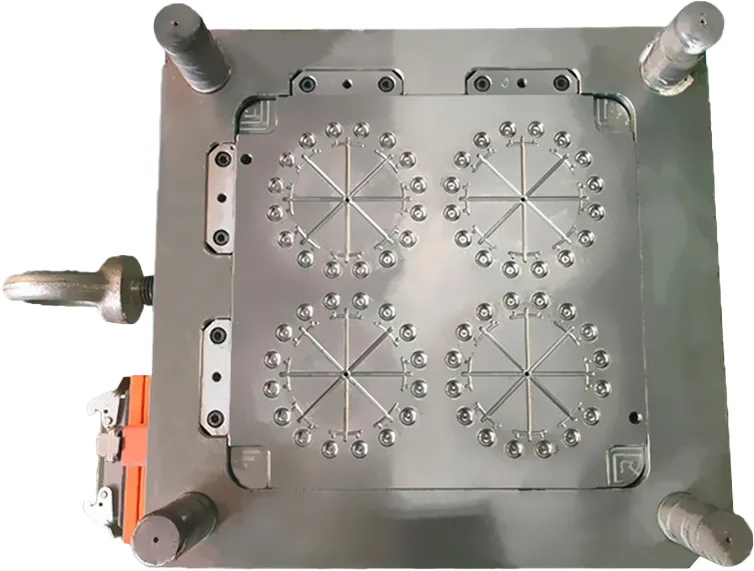
An optical-grade mold cavity is machined and polished to a mirror finish at the start of the tooling project. Over a production lifetime of hundreds of thousands to millions of shots, cavity surfaces can develop micro-wear, ejector marks, and corrosion — particularly around gate areas and ejection zones. Without regular maintenance and re-polishing, cavity surface quality degrades gradually, shifting lens surface roughness from the approved SPI A1 specification toward a rougher finish. This degradation appears in production output as increased haze and gradual transmittance reduction — changes that may not cause individual parts to fail inspection but can gradually shift the production population toward specification limits.
A manufacturer with a mature mold maintenance program tracks cavity shot count, schedules preventive polishing at defined intervals, and measures cavity surface quality after each polishing event. The customer should receive documented maintenance records and updated cavity measurement data — not only a verbal assurance that “the mold is in good condition.”
ASK SPECIFICALLY
- At what shot count intervals do you perform preventive mold maintenance?
- Do you re-measure cavity dimensions and surface quality after polishing?
- What documentation is provided to the customer after maintenance?
- What is the estimated mold life in shots for the steel grade you recommend?
- Who bears the cost of maintenance versus repair due to normal wear?
✅STRONG RESPONSE
- Documented preventive maintenance schedule by shot count
- Cavity interferometric measurement before and after polishing
- Maintenance log provided to customer with each service event
- S136 or NAK80 steel recommended for optical-grade surface durability
- Clear definition of what constitutes normal wear vs. damage requiring customer cost
People Also Ask
How long does an optical injection mold last?
The service life of an optical injection mold depends primarily on the selected mold steel grade and the abrasiveness of the molded material. For optical-grade PMMA and PC on S136 stainless mold steel (the most commonly specified steel for optical cavity inserts), mold life of 500,000 to 1,000,000 shots is typical with proper maintenance. NAK80 pre-hardened steel offers similar optical surface capability with slightly shorter life expectancy under high-volume conditions.
Mold life can be extended significantly by preventive maintenance — periodic cavity re-polishing before surface degradation reaches a level that affects lens quality. A mold that is re-polished every 50,000–100,000 shots, with cavity dimensions verified after each polishing event, will maintain optical surface specification far longer than one that is run until visible quality degradation forces a repair.
Supplier Evaluation Scorecard
Use this scorecard to compare responses from multiple suppliers. Every “Must Have” item that a supplier cannot confirm in writing is a risk factor that should be evaluated carefully before committing to a tooling order.
| EVALUATION CRITERION | PRIORITY | WHAT TO LOOK FOR |
|---|---|---|
| Cleanroom Classification | Must Have | ISO Class 6 or 7 with particle count test report <12 months old |
| In-House Coating Capability | Must Have | AR, HC, hydrophobic applied in own cleanroom facility; not outsourced |
| Written Mold Ownership Terms | Must Have | Explicit mold ownership clause in purchase agreement; zero storage fees |
| NDA Before Design Review | Must Have | Mutual NDA signed before any customer files are shared |
| ISO 9001:2015 Certification | Must Have | Current certificate with valid audit date, scope covers optical injection molding |
| Cpk Production Data Available | Important | Cpk ≥1.33 on CTQ dimensions from comparable production run, data shareable |
| Written DFM Review Before Tooling | Important | Written DFM report covering gate placement, birefringence, tolerance achievability |
| All-Electric Injection Machines | Important | Closed-loop position and pressure control for consistent shot-to-shot precision |
| Mold Maintenance Program | Important | Shot count-based preventive maintenance with cavity measurement documentation |
| SPC Monitoring in Production | Important | Real-time control charts on CTQ dimensions; defined response protocol for drift |
| ISO 13485 (Medical) | Application-Specific | Required if lens is used in a medical device; scope must cover injection molding |
| Zeiss CMM or Zygo Interferometry On-Site | Preferred | Enables full dimensional and surface quality verification without sending samples out |
| 20+ Years Optical Manufacturing Experience | Preferred | Established process knowledge; lower risk of encountering problems for the first time on your project |
One Final Check: Ask for Customer References
Ask for references from customers who have maintained production with the manufacturer for three or more years — not customers who only received successful first-article samples recently. Long-term customer retention is a strong indicator of production consistency, communication reliability, and mold maintenance discipline. A manufacturer who has kept the same customers for five or more years in precision optical lens production has demonstrated exactly the capabilities that supplier evaluation questions try to identify.
If you are evaluating ATRMOLD as a potential manufacturing partner, we welcome these eight questions and will provide written responses before any project information is shared. Our contact page is the starting point, or you can review our service capabilities on our optical lens injection molding and optical design and engineering pages before reaching out.
Ready to Evaluate ATRMOLD as Your Manufacturing Partner?
Ask us any of the eight questions above. We will provide written answers on cleanroom certification, mold ownership terms, Cpk data, and NDA procedures before any project information is shared.
Related Articles & Pages