
AUTONOMOUS PLATFORM VISION OPTICS
Drone & Robotics Vision Protective Lens Manufacturing
Custom protective cover lenses for drone cameras and mobile robot vision systems — why a lens that loosens by a fraction of a millimeter under sustained vibration can cause more field failures than any optical specification on the datasheet.
By: ATRMOLD Engineering Team
Sep 2026
Reading time: 12min
Category: Robotics & UAV Optics
IN THIS GUIDE
- What Drones and Mobile Robots Have in Common: Sustained Vibration, Different Payoffs
- Drone Camera Cover Lens: Weight Budget and Vibration-Induced Focus Drift
- Robotics Vision Cover Lens: Continuous-Duty Vibration and Industrial Floor Exposure
- Why Fit Tolerance Matters More Than It Looks Here
- Material Selection: Lightweight vs. Impact-Resistant Tradeoffs
- Where Our Capability Stops: The Imaging Lens Inside the Module
- Custom Molded Cover Lens vs. Off-the-Shelf Optic
- From DFM to Cleanroom Molding
- Supplier Sourcing Checklist
- Frequently Asked Questions
A drone doesn’t typically fail its mapping mission because of a poor lens coating, and a mobile robot doesn’t typically lose SLAM tracking because of insufficient resolution. More often, the root cause is mechanical: sustained vibration from motors, propellers, or wheel drivetrains gradually loosens the cover lens within its housing by a margin too small to detect during pre-flight or pre-shift inspection, shifting focus or introducing distortion that may not be traced back to the optics until the failure pattern repeats.
This guide covers the factors that determine cover lens reliability for drone and mobile robotics vision systems — vibration-induced mechanical loosening, weight constraints unique to airborne platforms, and the industrial-floor exposure that mobile robots face but airborne drones do not.
Scope note: This guide covers the protective cover lens — the outward-facing sealing component over the camera or vision sensor module — not the imaging lens elements that form the actual image inside the module. See Section 6 for more on this boundary.

1. What Drones and Mobile Robots Have in Common: Sustained Vibration, Different Payoffs
Both platforms subject their vision systems to continuous, motor-driven vibration for the entire duration of operation — not the occasional shock of a drop, but a steady mechanical stress that accumulates over hundreds or thousands of operating hours. Documented UAV embedded vision analysis identifies two distinct failure modes from this: a mechanical one, where vibration gradually loosens lens barrel threads and mounting interfaces, shifting focus across successive flights without any visible damage at inspection; and an image-quality one, where high-frequency vibration transmitted through the airframe produces blur or, on rolling-shutter sensors specifically, geometric skew and wobble rather than simple blur.
The first failure mode — mechanical loosening at the cover lens and housing interface — is fundamentally a fit and manufacturing-tolerance issue, and it is the failure mode most directly within our scope as a component supplier.
2.Drone Camera Cover Lens: Weight Budget and Vibration-Induced Focus Drift
Every gram added to a drone payload reduces available flight time, making weight a genuine design constraint for drone cover lenses in a way it is not for ground-based cameras. Compact M12/M8-style lens mounting is standard across the industry specifically to minimize payload weight, and cover lens wall thickness and material density need to be optimized against that same budget rather than defaulting to a heavier, more conservative spec.
Why fit tolerance matters as much as weight: Vibration at motor and propeller harmonic frequencies can loosen improperly secured lens mounting threads over repeated flights — a slow, cumulative process that gradually defocuses imagery without any obvious hardware failure. A cover lens engineered with the correct fit tolerance and secure mounting geometry for sustained vibration exposure helps prevent this failure mode rather than requiring field re-tightening or periodic recalibration.
3. Robotics Vision Cover Lens: Continuous-Duty Vibration and Industrial Floor Exposure
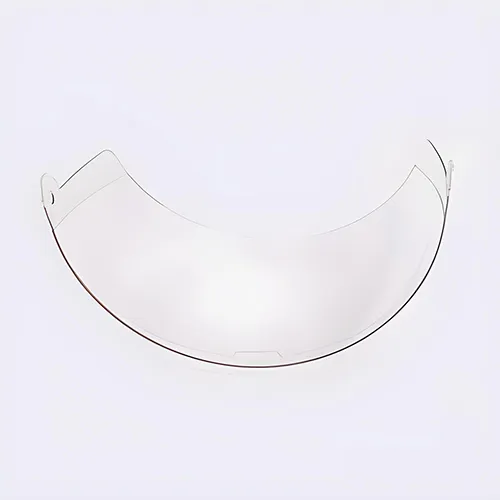
Mobile robots — AMRs, AGVs, and SLAM-navigation service robots — face a related but distinct vibration profile: continuous, lower-frequency vibration from wheel drivetrains and motors sustained across full operating shifts, combined with an industrial floor environment that drones never encounter. Dust and debris accumulation, exposure to floor-cleaning chemicals, and occasional low-speed impacts caused by navigation errors or obstacles all add durability requirements beyond those faced by drone cover lenses.
Weight is a much smaller constraint here than for drones, which generally allows a more conservative, impact-resistant material and wall-thickness specification without the same tradeoff pressure.
4. Why Fit Tolerance Matters More Than It Looks Here
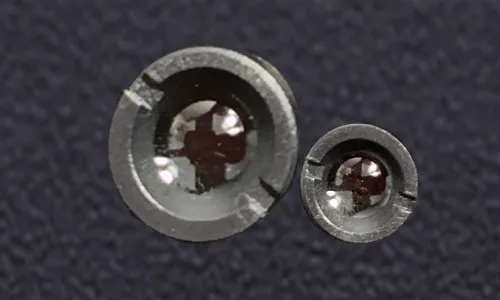
A cover lens that is dimensionally correct during first-article inspection can still loosen in the field if fit tolerance and material dimensional stability under sustained vibration are not engineered together from the start — the same underlying principle covered in our dimensional stability guide, applied here to vibration rather than thermal cycling as the primary stress. For both drones and mobile robots, this makes fit-and-retention design at least as important as the material spec itself.
5. Material Selection: Lightweight vs. Impact-Resistant Tradeoffs
| Application | Primary Constraint | Typical Material Direction |
|---|---|---|
| Drone camera cover lens | Minimizing weight without compromising fit integrity under vibration | PMMA for lower density where impact risk is limited to controlled operation |
| Drone obstacle-avoidance array cover | Multiple small covers per unit, weight multiplied across the array | Thin-wall PC or PMMA optimized per unit weight, not treated as a single large lens |
| Industrial mobile robot cover lens | Continuous vibration + dust/chemical exposure + occasional impact | Impact-resistant PC, chemical-resistant grade where cleaning agent exposure is expected |
6. Where Our Capability Stops: The Imaging Lens Inside the Module
As with the other recording and sensing devices covered in our guides to dash cam and body camera cover lenses and action camera housing lens manufacturing, the cover lens sealing a drone or robot vision module is a different manufacturing problem than the multi-element imaging lens forming the actual image inside — a precision imaging optics discipline outside our current scope.
7. Custom Molded Cover Lens vs. Off-the-Shelf Optic
Off-the-Shelf Cover Lens
- Faster initial sourcing for early prototyping
- Generic weight spec, not optimized for your payload budget
- Fit tolerance not validated against your specific vibration profile
- Standard footprint that may not match your compact housing
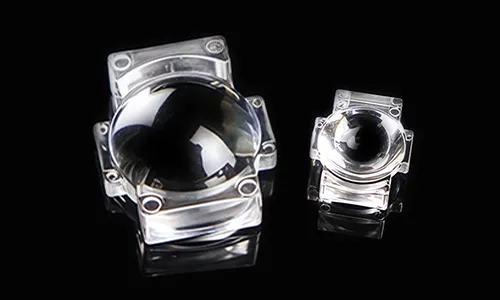
Custom Molded Cover Lens
- Wall thickness and material optimized against your actual weight budget
- Fit and retention geometry engineered for your specific vibration profile
- Footprint matched to your compact vision module housing
- Unit cost improves significantly at production platform volumes
8. From DFM to Cleanroom Molding
DFM Review for Fit and Weight. Drawings are reviewed through optical design engineering analysis to evaluate retention geometry, wall-thickness optimization, and gate placement before tooling begins.
Precision Mold Construction. Cavities are built through precision mold manufacturing, with fit and seal-interface tolerances verified before production release.
Cleanroom Molding. Production runs in a controlled cleanroom environment, consistent with our broader optical lens injection molding process.
Cpk-Tracked Verification. Fit-critical and optical-critical dimensions are monitored using production Cpk data, following the approach in our optical lens quality control and metrology guide.
9. Supplier Sourcing Checklist
Can you engineer fit and retention geometry against our specific vibration frequency profile?
Can you optimize wall thickness and material against our payload weight budget (for drones specifically)?
What impact-resistant and chemical-resistant material grades do you offer (for industrial robotics specifically)?
Can you validate that fit tolerance holds after sustained vibration testing, not only in a static inspection?
Do you track Cpk data on the fit-critical and optical-critical dimensions specific to this application?
What cleanroom class do you produce in?
Frequently Asked Questions
Why does my drone’s footage gradually go out of focus across multiple flights?
This is a well-documented failure mode: sustained vibration at motor and propeller harmonic frequencies can gradually loosen lens mounting threads or the cover lens fit within its housing, shifting the focal point over successive flights without any visible damage at pre-flight inspection. Correct fit tolerance and secured mounting geometry, engineered against the vibration profile from the start, prevent this from developing.
Does cover lens weight actually matter for drone performance?
Yes, it can have a meaningful impact. Every gram in a drone payload comes directly out of flight time, and this effect multiplies when a drone uses multiple small cameras for obstacle avoidance in different directions. Wall thickness and material density should be optimized against the platform’s actual weight budget rather than using a generic, heavier default.
What’s different about cover lens requirements for industrial mobile robots versus drones?
Mobile robots face continuous, lower-frequency vibration from wheel drivetrains sustained across full shifts, combined with dust, floor-cleaning chemical exposure, and occasional low-speed impact — none of which a drone encounters. Weight is a much smaller constraint for ground robots, generally allowing a more conservative, impact-resistant material specification.
Do you manufacture the imaging lens inside a drone or robot camera?
No. We manufacture the protective cover lens that seals and protects the vision module from the environment. The imaging lens elements that form the actual image inside the module are a distinct precision imaging optics discipline outside our current scope.
What production volumes are typical for custom drone or robotics cover lens tooling?
Prototype and validation batches are typically produced in the hundreds of units for fit, vibration, and weight testing before committing to full production tooling. Unit costs improve significantly at production platform volumes compared to prototype-stage runs.
Drone and mobile robot vision systems can experience more field failures from a cover lens loosening under sustained vibration than from an optical specification falling short — a mechanical fit problem that can appear as an image-quality complaint. Engineering the weight budget, fit tolerance, and environmental durability around the platform’s actual operating conditions, rather than defaulting to a generic cover lens specification, helps prevent this failure mode in the field. If you’re specifying cover lens tooling for a new drone or robotics vision program, review the questions in Section 9 before committing the tooling budget.
Sourcing a Custom Drone or Robotics Vision Cover Lens?
Talk to our optical engineering team about vibration-resistant fit design, weight-optimized material selection, and industrial-grade sealing for your autonomous platform program.
ATRMOLD — Precision Optical Lens Injection Molding & Mold Manufacturing