
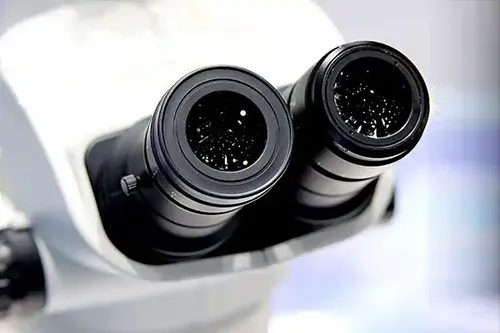
Custom PPG sensor lenses and pulse oximeter lens components for wearable health devices, fingertip SpO2 monitors, and patient monitoring systems — what determines signal accuracy, why optical crosstalk causes more sensor failures than material selection, and how to evaluate a manufacturing partner before tooling.
By: ATRMOLD Engineering Team
August 2026
Reading time: 12 min
Category: Medical Wearable Optics
IN THIS GUIDE
- What Is a PPG Sensor Lens or Pulse Oximeter Lens?
- Optical Crosstalk: The Design Risk That Breaks SpO2 Accuracy
- Wavelength-Matched Material Selection for PPG Optics
- Tolerance Requirements for LED-to-Photodiode Spacing
- Custom Molded Lens vs. Off-the-Shelf Optical Window
- From DFM to Cleanroom Molding: How a PPG Lens Program Runs
- Supplier Sourcing Checklist for PPG & Pulse Oximeter Lenses
- Frequently Asked Questions
A pulse oximeter or wearable heart-rate monitor depends on a component most buyers don’t specify closely enough: the small optical window positioned between the LED emitters, the photodiode, and the skin. Even a slight error in lens geometry may not produce a visible defect. Instead, it can cause inconsistent readings across darker skin tones, increased motion-related drift, or accuracy-validation failures after the PCB and firmware are already locked in.
This guide covers the key factors that determine PPG sensor lens and pulse oximeter lens performance: optical crosstalk control, wavelength-matched material selection, and dimensional tolerances that support accurate reflectance-type sensing in the field — written for hardware teams and procurement managers sourcing custom optical components for wearable and patient-monitoring devices, not for OEMs seeking a certified finished medical device.
1. What Is a PPG Sensor Lens or Pulse Oximeter Lens?
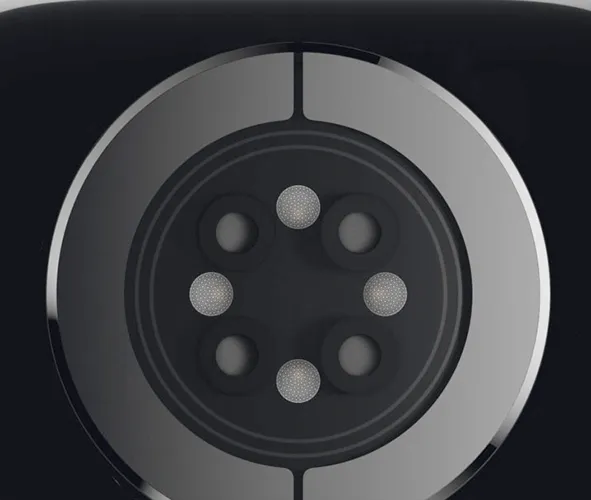
A PPG (photoplethysmography) sensor lens is a precision-molded optical window positioned over an LED-photodiode pair, shaping and directing light into the skin and channeling the reflected or transmitted signal back to the detector. Unlike an imaging lens, it does not form an image — its function is to maximize the signal-to-noise ratio of a weak optical signal while physically blocking light paths that do not pass through tissue.
The same core component goes by several names depending on the application: pulse oximeter lens in clinical and fingertip SpO2 devices, PPG sensor window or optical biosensor lens in wearable engineering documentation, and heart-rate sensor lens in consumer smartwatch and fitness-band design. All three describe the same functional problem: coupling LED and photodiode optics through a molded plastic window with minimal signal loss and minimal internal interference.
2. Optical Crosstalk: The Design Risk That Breaks SpO2 Accuracy
For hardware engineers debugging a noisy PPG signal, optical crosstalk is often a primary suspect. Crosstalk occurs when light travels from the LED to the photodiode without passing through tissue — reflecting internally off the lens surface, the device cover glass, or the gap between the sensor module and housing. That stray light reaches the detector as a large DC offset that can saturate the analog front end and mask the much smaller pulsatile AC signal.
Published research on reflectance-type pulse oximetry demonstrates that sensors without adequate crosstalk suppression produce measurably larger errors — and that the error magnitude varies by skin tone, making crosstalk control both a signal-quality imperative and an accuracy-equity requirement across the user population a device serves.
This is where lens geometry, rather than material selection alone, becomes a critical design factor. A well-engineered PPG sensor lens integrates a physical light-isolation wall directly between the emitter and detector optical paths — a single-piece feature that can be molded directly into the component but is difficult to retrofit onto an off-the-shelf flat window.
Design note: LED-to-photodiode spacing directly trades off against signal strength. Insufficient spacing increases crosstalk and backscatter; excessive spacing reduces the current transfer ratio and attenuates the usable signal. This spacing is typically finalized during electrical design — but the lens geometry must be engineered around it, requiring optical and mechanical design to proceed concurrently rather than sequentially.
3. Wavelength-Matched Material Selection for PPG Optics
Standard pulse oximeters use a red LED near 660nm and an infrared LED near 940nm — wavelengths selected to provide the differential hemoglobin absorption needed to calculate oxygen saturation. Wrist-worn heart-rate wearables commonly add a green LED near 520–530nm, since hemoglobin absorbs green light strongly enough to produce a high-amplitude, clean pulsatile signal for heart-rate tracking, even though green light does not penetrate deeply enough to resolve SpO2 independently.
Lens material must transmit all operational wavelengths consistently without introducing wavelength-dependent absorption that could skew the red/infrared ratio used to calculate SpO2.
| Material | Transmittance Across 520–940nm | Typical Fit |
|---|---|---|
| Optical-Grade PC | Good, minor wavelength-dependent variation | General wearable and consumer health devices |
| Optical-Grade PMMA | Excellent, very flat spectral response | Applications sensitive to red/IR ratio accuracy |
| COC/COP | Excellent, low moisture-related drift over time | Devices exposed to sweat, washing, or humidity cycling |
For skin-contact wearable and medical devices, material biocompatibility (typically validated against ISO 10993) is a requirement the device OEM carries as part of their own product certification. As a molding partner, our role is selecting and processing a material that meets the OEM’s specified biocompatibility grade and optical performance target — not issuing biocompatibility certification for the finished device ourselves.
4. Tolerance Requirements for LED-to-Photodiode Spacing
PPG sensor lenses are compact — frequently under 6mm across, with internal isolation walls measured in fractions of a millimeter. At this scale, the micro-molding discipline required for high-precision optics applies directly: gate placement affects the optical zone, ejector pins must not contact functional surfaces, and shrinkage variation that is negligible on a larger lens becomes proportionally critical here.
- Isolation wall thickness and height — must remain dimensionally consistent across the full production run to maintain uniform crosstalk suppression from unit to unit.
- Optical surface flatness or curvature directly above the LED and photodiode — deviations shift the effective coupling angle and alter signal amplitude.
- Overall lens footprint tolerance — must align precisely to the PCB-mounted LED/PD package, since the entire optical path relies on a fixed mechanical relationship between lens and components.
These tolerance-control principles align with those detailed in our optical lens injection molding tolerances guide — applied here to a component where tolerances are held in microns rather than fractions of a millimeter.
5. Custom Molded Lens vs. Off-the-Shelf Optical Window
A common sourcing question for hardware teams developing a new PPG-based product: is a custom injection-molded lens necessary, or will a stock flat optical window suffice? The decision depends on the accuracy requirements and production scale of the program.
Off-the-Shelf Flat Window
- Lower tooling cost, faster initial sourcing
- No integrated crosstalk isolation — requires a separate mechanical baffle or secondary gasket
- Generic fit; may not match your specific LED/PD footprint precisely
- Reasonable for early prototyping or low-volume proof-of-concept builds
Custom Molded PPG Sensor Lens
- Isolation wall molded as an integrated feature — eliminates a secondary assembly step or failure-prone gasket
- Optical geometry matched exactly to your LED/PD spacing and wavelength profile
- Consistent crosstalk suppression across production, verified by Cpk data rather than one-off bench testing
- Unit cost drops significantly at volume production scales
For a one-off bench prototype, a stock window with a mechanical baffle can validate the concept quickly. For a production-bound device — particularly one requiring consistent accuracy across user skin tones and dynamic motion conditions — a custom molded lens provides a more reliable and, at volume, more cost-effective solution.
6. From DFM to Cleanroom Molding: How a PPG Lens Program Runs
A structured PPG or pulse oximeter lens program follows a disciplined manufacturing workflow tailored to sub-millimeter optical tolerances:
- DFM Review for Optical-Mechanical Fit. Part drawings undergo optical design engineering review specifically for isolation-wall geometry, LED/PD footprint alignment, and gate placement outside the critical optical clear aperture.
- Precision Mold Construction. Tooling cavities are built via precision mold manufacturing, referenced to the mechanical mounting datum so the molded lens aligns reliably to the PCB sensor array.
- Cleanroom Molding. Production runs in a controlled cleanroom environment to minimize particulate contamination that could scatter light in micro-optics, consistent with our standard optical lens injection molding process.
- Cpk-Tracked Quality Verification. Critical-to-quality optical dimensions — isolation wall geometry, surface profile, and footprint tolerance — are tracked using statistical process control (Cpk) data rather than verified solely through initial first-article samples, consistent with our optical lens quality control and metrology guide.
7. Supplier Sourcing Checklist for PPG & Pulse Oximeter Lenses
Questions to evaluate when qualifying a PPG sensor lens manufacturing partner before committing tooling capital:
Can you mold an integrated optical isolation wall as a single feature, or does crosstalk suppression require a secondary baffle assembly?
What resin options do you support for red/IR/green transmission, and can you provide spectral transmittance data?
Can you hold external footprint tolerances tight enough to register accurately with our PCB-mounted LED/photodiode package?
Do you report Cpk data on critical optical and isolation dimensions, rather than just basic external dimensions?
What cleanroom classification is used for molding, and how is particulate contamination controlled?
Can your resin selection process support the biocompatibility standards our device certification requires, while recognizing final product certification remains our responsibility?
Frequently Asked Questions
What material is best for a pulse oximeter or PPG sensor lens?
Optical-grade PMMA provides a relatively flat spectral response across red and infrared wavelengths, making it a strong baseline for SpO2 measurement accuracy. COC/COP is preferred for wearables subject to sweat exposure or thermal/humidity cycling due to its superior moisture resistance and dimensional stability. Optical PC remains a practical option for general consumer wearables where unit cost takes priority over absolute spectral flatness.
Why does my PPG sensor reading drift or show noise during motion?
Motion artifact is distinct from optical crosstalk — it occurs when tissue perfusion and optical coupling shift as the sensor moves relative to the skin. While lens design cannot eliminate motion artifacts entirely, an optically isolated lens geometry can reduce baseline noise and DC offset, providing cleaner data for downstream filtering algorithms.
What causes optical crosstalk in a pulse oximeter sensor?
Crosstalk occurs when emitted light reaches the photodiode without traversing vascular tissue — typically via internal total reflection within the lens/cover material or light leakage through mechanical gaps. It can manifest as a large DC offset that saturates the analog front end and obscures the pulsatile AC signal.
How do I choose between a custom molded lens and a stock optical window for a new wearable product?
Stock windows work well for initial proof-of-concept testing. However, production programs requiring repeatable accuracy across diverse skin tones and operational environments benefit from custom molded lenses with integrated isolation walls, which eliminate secondary assembly steps and ensure lot-to-lot optical consistency. Section 5 provides a detailed comparison.
Do you provide medical device certification for pulse oximeter products?
No. We manufacture the custom precision optical component to your mechanical and optical specifications — including resin selection, geometry, and dimensional tolerances. Finished-device regulatory certification, ISO 10993 biocompatibility testing, and clinical validation remain the responsibility of the OEM.
What production volumes are typical for custom PPG sensor lens tooling?
Validation and pilot runs typically range in the hundreds to low thousands of units for optomechanical verification prior to full-scale production tooling release. Unit costs decrease substantially at volume production levels compared to prototype-phase runs.
A PPG or pulse oximeter sensor lens is a compact component with a significant impact on overall device performance. Optical crosstalk suppression, wavelength-matched material selection, and micron-level dimensional control determine whether a wearable monitoring device performs reliably across users and operating conditions — or develops accuracy drift that is difficult to resolve downstream. If you are developing a new sensor architecture, reviewing the criteria in Section 7 with your manufacturing partner prior to tooling will help safeguard project timelines.
Sourcing a Custom PPG Sensor Lens or Pulse Oximeter Lens?
Talk to our optical engineering team about crosstalk-isolation lens design, wavelength-matched material selection, and Cpk-tracked production for your wearable or patient-monitoring program.
ATRMOLD — Precision Optical Lens Injection Molding & Mold Manufacturing