
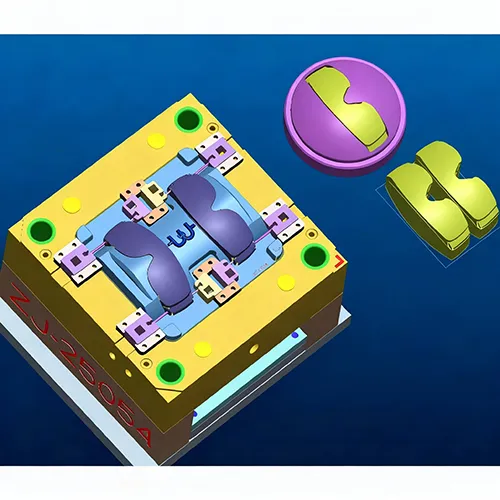
A pair of safety goggles has one job that safety glasses do not: sealing against the face well enough to prevent dust, liquid splash, and debris from entering from all directions, not just the front. That difference — sealing geometry, not just lens material — is where most sourcing conversations with a new protective eyewear manufacturer go wrong. Buyers often specify the lens correctly but overlook the frame design, ventilation strategy, and the interaction between the two during fogging or impact events. This guide covers how industrial safety goggles are actually engineered and manufactured, from lens material through frame construction to the certification markings that determine what a finished product can legally claim.
By: ATRMOLD Engineering Team
August 2026
Reading time: 13 min
Category: Engineering Manufacturing
- Safety Glasses vs. Safety Goggles: Why the Distinction Changes Your Sourcing Brief
- Lens Material Selection for Industrial Safety Goggles Industrial safety goggle
- The Zero-Diopter Standard: Optical Clarity in Safety Eyewear
- Frame and Seal Construction: Vented, Indirect-Vented, and OTG Design
- Certification Markings: What ANSI Z87.1 and EN166 Actually Require
- Matching Goggle Type to Industrial Application
- What to Specify in a Custom Protective Eyewear RFQ
- Frequently Asked Questions
1. Safety Glasses vs. Safety Goggles: Why the Distinction Changes Your Sourcing Brief
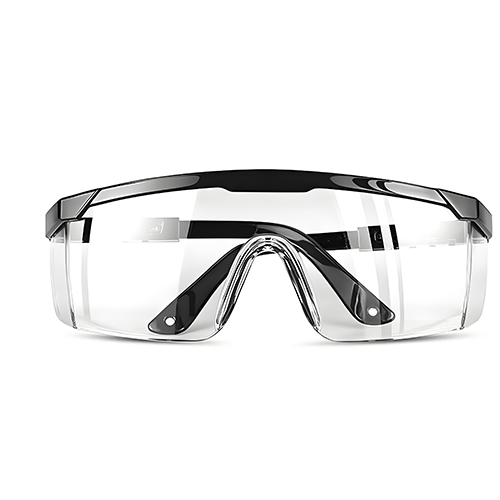
Safety glasses and safety goggles are frequently treated as interchangeable terms in casual conversation, but they represent two distinct engineering problems for a manufacturer. Safety glasses are essentially protective lenses mounted in a spectacle-style frame, with protection focused primarily on frontal impact and, in some cases, supplemented by side shields for lateral coverage. Safety goggles are built around a sealed or semi-sealed frame that wraps the eye socket, designed specifically to block dust, liquid splash, and airborne particulate from entering around the edges of the lens — a hazard exposure that a spectacle-style frame cannot fully address regardless of lens quality.
This distinction changes what a sourcing team needs to specify. A safety glasses RFQ is largely focused on lens and frame specifications. A safety goggle RFQ must additionally define seal geometry, ventilation strategy, and facial fit performance across a range of head sizes—variables that do not exist in a standard safety glasses program.

2. Lens Material Selection for Industrial Safety Goggles
lenses are molded almost exclusively from optical-grade polycarbonate for one primary reason: PC combines high impact resistance with the ability to be injection molded into complex wraparound geometries without secondary tempering—a combination that alternative materials at comparable cost cannot match.
| MATERIAL | IMPACT RESISTANCE | OPTICAL CLARITY | TYPICAL USE CASE |
|---|---|---|---|
| Polycarbonate (PC) | Excellent — standard for certified impact ratings | Good, with process control | General industrial, construction, chemical splash goggles |
| Acetate / CR-39 | Lower — generally does not meet high-impact ratings | Excellent | Non-impact applications only (rarely used for industrial goggles) |
| PMMA (Acrylic) | Moderate — better scratch resistance than PC uncoated | Excellent | Face shields and lower-hazard visor applications |
Coating selection is the primary factor distinguishing the field performance of mid-range and premium safety goggles. Hard coating adds scratch resistance to an otherwise soft PC surface; anti-fog coating (or a dual-sided hydrophilic treatment) prevents condensation build-up during high-exertion or temperature-swing conditions; and anti-UV treatment blocks radiation exposure for outdoor or welding-adjacent applications. For a deeper comparison of how these coatings perform and where each makes sense, see our coating comparison guide, and for a full breakdown of PC against alternative optical resins, see our material selection guide.
3. The Zero-Diopter Standard: Optical Clarity in Safety Eyewear
A safety goggle can pass every impact certification test and still cause measurable eye strain over an 8-hour shift if the lens introduces optical distortion — a defect entirely separate from impact performance, and one that a general-purpose molder’s standard QC checklist typically doesn’t catch. Wall thickness variation across a curved goggle lens introduces induced refractive power; uneven cooling introduces stress birefringence visible as rainbow-colored streaking under bright light or polarized sunglasses.
We’ve covered the engineering behind distortion-free protective lens molding — wall thickness control, birefringence prevention, and the SPI A1 mirror finish required for consistent light transmission — in detail in our Zero-Diopter protective lens guide. The short version for goggle sourcing specifically: impact certification tells you the lens won’t shatter. It does not indicate whether the wearer will experience eye strain during an extended work shift.
4. Frame and Seal Construction: Vented, Indirect-Vented, and OTG Design
Lens material receives most of the attention during safety goggle sourcing discussions, but frame and seal design determine whether the finished product provides the intended level of protection—and each represents a specialized molding discipline.
Frame Material: PVC, TR90, and Rigid PC
Goggle frames are typically molded from soft PVC or thermoplastic elastomer (for facial seal comfort and flexibility), rigid PC (for structural components and lens-retention channels), or TR90 nylon copolymer where a lighter, more flexible frame with better cold-weather impact resistance is required. Frame material selection directly influences seal performance—a frame that is too rigid to conform to facial contours will leave gaps regardless of lens quality.
Ventilation Strategy: Direct Vented, Indirect Vented, and Non-Vented
Ventilation design represents a fundamental engineering trade-off rather than a secondary product feature: direct-vented goggles allow airflow through open channels for maximum fog control but permit some liquid and fine particulate ingress; indirect-vented goggles route airflow through baffled channels that block splash and larger particulates while still allowing some air exchange; non-vented (fully sealed) goggles offer the highest protection against liquid splash and fine dust but rely entirely on anti-fog coating to manage condensation, since no airflow path exists. Matching the ventilation strategy to the actual hazard—chemical splash, flying debris, or fine dust—is a specification decision that should be finalized before mold design begins.
Designing for Over-The-Glasses (OTG) Compatibility
A significant share of industrial workforces wear prescription eyewear, which makes OTG-compatible goggle design a standard, not an optional, specification for many industrial buyers. OTG goggles require a larger internal cavity, a modified frame profile to accommodate spectacle temple arms without compromising the facial seal, and, in many cases, a wider strap adjustment range—all of which affect lens curvature and overall mold geometry and must be defined during the design stage rather than treated as a simple size increase to an existing mold.
Sourcing tip:
If your workforce includes prescription-eyewear wearers, specify OTG compatibility explicitly in your RFQ rather than assuming a standard goggle will fit — the internal cavity and seal profile are different mold designs, not a sizing variant of the same tool.
5. Certification Markings: What ANSI Z87.1 and EN166 Actually Require
Certification markings on a finished goggle are shorthand for a specific tested performance level, and sourcing teams benefit from understanding what each marking actually confirms rather than treating “ANSI certified” as a single pass/fail label.
| MARKING | STANDARD | WHAT IT CONFIRMS |
|---|---|---|
| Z87 | ANSI Z87.1 (basic impact) | Meets baseline impact and optical requirements for general occupational eye protection |
| Z87+ | ANSI Z87.1 (high impact) | Passes high-velocity and high-mass impact testing beyond the basic Z87 threshold |
| EN166 Class S / F / B / A | EN166 (impact classes) | Increasing impact energy resistance: S (increased robustness), F (low energy), B (medium energy), A (high energy) |
| EN166 Class 3 | EN166 (liquid droplet/splash) | Confirms protection against liquid droplets and splash, relevant for chemical handling applications |
Certification status is not automatic—it is determined by the specific material, lens thickness, and frame design submitted for testing and must be verified before production begins rather than assumed from a similar product. A change as small as a coating substitution or a frame material swap can affect which certification class a finished goggle is actually entitled to claim.
6. Matching Goggle Type to Industrial Application
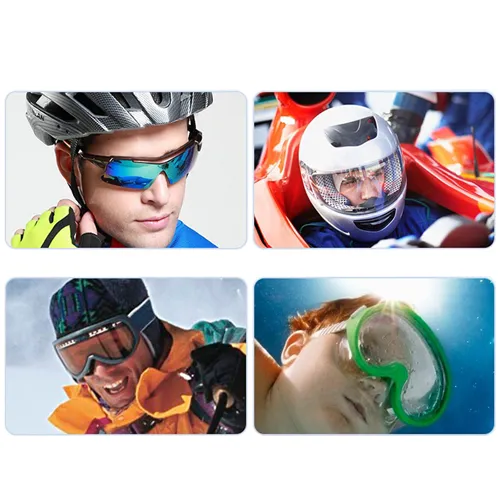
Different work environments create fundamentally different hazard profiles, which is why industrial safety goggles encompass multiple product categories rather than a single universal design.
| APPLICATION | PRIMARY HAZARD | RECOMMENDED CONFIGURATION |
|---|---|---|
| Construction Sites | Flying debris, dust | Indirect-vented, Z87+ / EN166 Class B impact rating |
| Chemical & Laboratory | Liquid splash, vapor | Non-vented, EN166 Class 3 splash rating, anti-fog coating |
| Woodworking & Metalworking | High-velocity particulate | Direct or indirect-vented, high-impact PC lens |
| Cold Storage & Food Processing | Fogging from temperature differential | Dual-lens or advanced anti-fog treatment, sealed frame |
7. What to Specify in a Custom Protective Eyewear RFQ
A well-scoped RFQ for a customized protective glasses or goggle program should specify, at minimum: the target certification (ANSI Z87.1 basic or high-impact, EN166 class), lens material and coating package, frame material and ventilation strategy, OTG compatibility if required, and any private-label requirements — logo molding, custom frame color, or branded packaging — since these customizations go through engineering review to confirm they don’t affect the certified performance of the base design.
Tooling and production for a custom safety goggle program follow the same precision mold manufacturing and optical engineering review process used throughout ATRMOLD’s protective lens programs, with production quality verified according to the standards outlined in our quality control and metrology guide.
A supplier that provides a quotation for a custom goggle program without discussing ventilation strategy, OTG requirements, or the target certification class is typically pricing a generic catalog product rather than engineering a solution for the actual hazard profile.
Frequently Asked Questions
What is the difference between safety glasses and safety goggles?
Safety glasses use a spectacle-style frame that protects primarily against frontal impact, while safety goggles use a sealed or semi-sealed frame designed to block dust, liquid splash, and particulate from entering around the edges of the lens — a level of peripheral protection spectacle-style frames cannot provide.
What materials are used to make safety goggles?
Lenses are most commonly molded from optical-grade polycarbonate for its impact resistance and moldability into curved shapes. Frames use soft PVC or thermoplastic elastomer for facial seal flexibility, rigid PC for structural components, or TR90 nylon copolymer for lighter, cold-resistant applications.
What are the main types of safety goggles?
Goggles are typically categorized by ventilation strategy — direct-vented, indirect-vented, or non-vented — and by certification class for impact and splash resistance. The appropriate configuration depends on whether the primary hazard is dust, flying debris, or liquid and chemical splash.
How do safety goggles protect against different hazards?
Safety goggles combine an impact-resistant lens with a sealed frame profile that blocks entry points around the eyes. Ventilation channels, when present, are engineered to allow airflow for fog control while filtering or blocking the specific hazard — liquid, dust, or debris — the goggle is rated for.
Can safety goggles be worn over prescription glasses?
Yes, but this requires an OTG (over-the-glasses) specific design with a larger internal cavity and modified frame profile to accommodate spectacle temple arms without breaking the facial seal — a distinct mold design rather than a simple size adjustment of a standard goggle.
What does the Z87+ marking on safety goggles mean?
Z87+ indicates the goggle has passed ANSI Z87.1 high-impact testing, a higher performance threshold than the basic Z87 marking, and is typically required for environments with higher-velocity flying debris hazards.
RELATED ARTICLE
RELATED ARTICLE
RELATED ARTICLE
SERVICE PAGE
Sourcing custom industrial safety goggles or protective eyewear?