
Optical Lens Mold Manufacturer: Precision Injection Mold Design, CNC Machining & Mirror-Grade Polishing
ATRMOLD designs and manufactures precision optical lens molds with Critical Optical Feature Accuracy ±0.001mm and surface finishes up to SPI A1. We support manufacturers from initial DFM review through stable high-volume mass production.
Our in-house mold workshop handles 5-axis CNC machining, EDM processing, and mirror-grade polishing — eliminating the quality risks associated with outsourced tooling. Every mold is fully owned by the customer, and lifetime maintenance support is included.
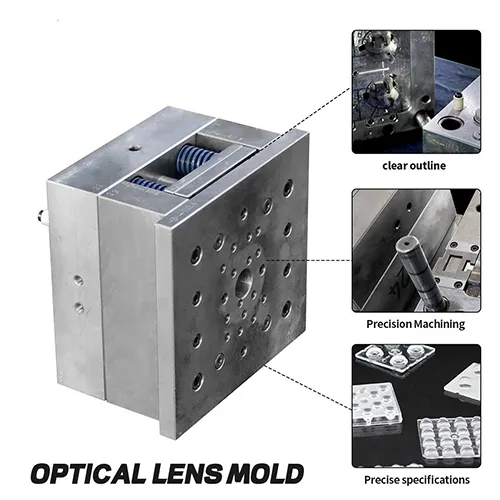
OUR 5-STEP OPTICAL LENS MOLD ENGINEERING PROCESS
→
→
→
→
20+
Years Mold Manufacturing Experience
±0.001mm
Critical Optical Feature Accuracy
5–7 Wks
Standard Mold Lead Time
SPI A1
Mirror-Grade Surface Finish
Engineering Validation & DFM Analysis for Preventing Warpage, Sink Marks & Optical Distortion
Successful molding begins with engineering validation. Before tooling release, our engineers perform detailed DFM analysis and feasibility evaluations.
- Product structure and functional analysis
- Material behavior analysis for PMMA, PC, and engineering plastics
- Risk identification for warpage, sink marks, and optical distortion
Our DFM review covers wall thickness uniformity, draft angle verification, gate location optimization, and cooling channel layout — typically completed within 3–5 business days. This step significantly reduces mold trial iterations before any steel is cut.
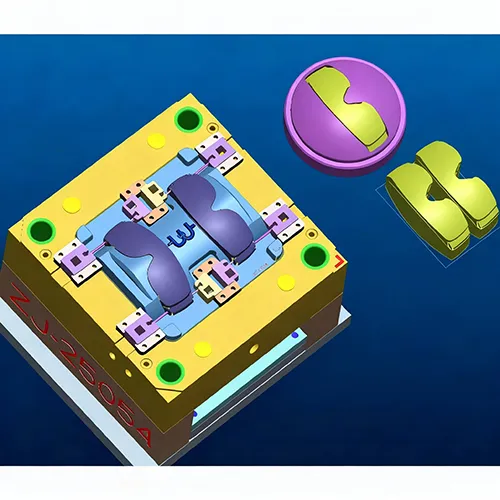
Engineering-Driven Mold Design for Optimized Cooling, Steel Selection & Long-Term Stability
Our mold designs are engineered for stability and repeatability — not just dimensional accuracy on drawings. Three engineering decisions are made at this stage: structural layout, steel grade, and runner system. All three directly affect mold life, part quality,
2.1 — Structural Design for Cooling & Stability
- Mold structure optimization for durability
- Cooling layout design for thermal balance
- Parting line, ejection system, and venting strategy planning.
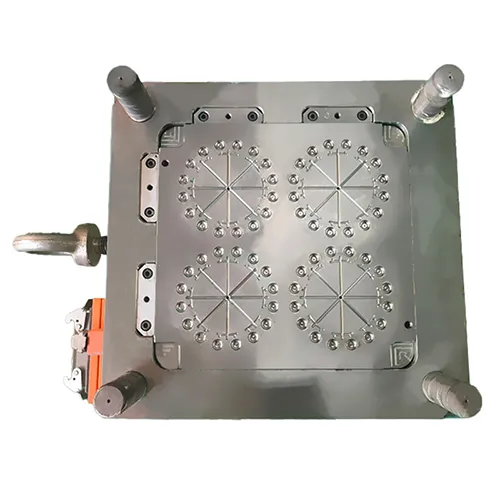
2.2 — Optical Mold Steel Selection
Steel grade is determined at the design stage, before machining begins, because it directly affects achievable surface finish, polishing performance, and cavity life. The table below compares the four grades we use most often.
2.3 — Cold Runner vs Hot Runner System Selection
Runner type is the second production-related decision made during mold design. It is chosen based on production volume, not added after the mold is built.
Cold Runner
Cold Runner
- 20–30% lower initial tooling cost
- Flexible design adjustments
- Best for production under 50,000 pieces/year
- Suited to prototype and low-volume orders
Hot Runner
- 15–25% lower material waste
- Up to 30% faster cycle time
- Recommended above 100,000 pieces/year
- Better suited to high-cavity-count molds
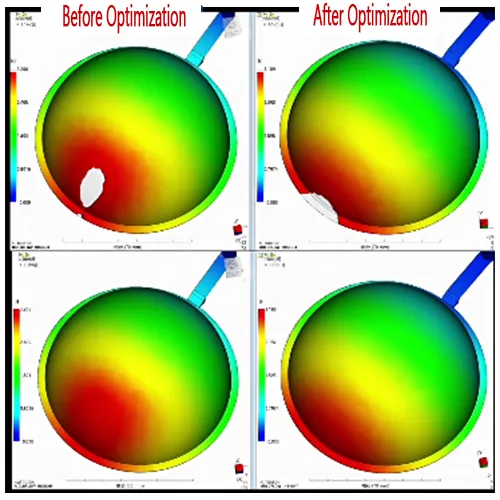
Mold Flow Analysis & Process Simulation for Gate Optimization & Dimensional Stability
Once the structural design, steel grade, and runner system are confirmed, mold flow analysis is run to validate the design before any machining begins — identifying filling and cooling issues while design changes remain cost-effective.
- Reduced trial-and-error during mold testing
- Early detection of filling imbalance and air traps
- Improved surface quality and dimensional consistency
Flow simulation results are reviewed jointly with the customer before mold release, covering fill time, pressure distribution, weld line location, and shrinkage prediction. This step typically reduces first-article rejection rates from an industry average of 30–40% down to under 10%.
Precision Mold Manufacturing with CNC Machining, EDM & Optical-Grade Mirror Polishing
With the design validated, all molds are manufactured in-house using precision CNC machining, EDM processing, and optical-grade polishing.
- CNC machining for complex mold structures
- EDM machining for fine features and optical details
- High-polish cavities for optical clarity
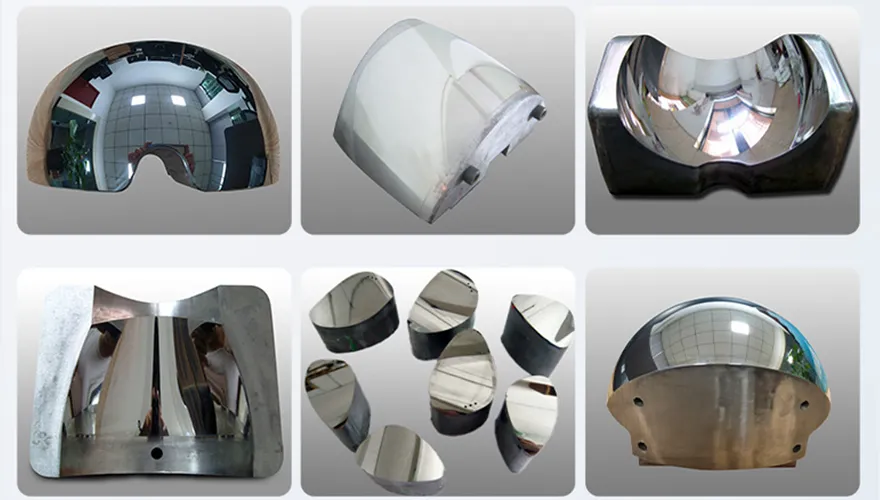
Our CNC machining centers hold positioning accuracy up to ±0.001mm. EDM processing is used for sharp internal corners, fine ribs, and micro-features that CNC tooling cannot reach. Final cavity polishing achieves surface roughness as low as Ra ≤0.01μm to meet optical-grade transparency requirements.
Mold Quality Control & Production Validation for Stable Mass Production
The final step is dimensional inspection and trial molding prior to mass production approval. We also support flexible tooling for small batch and prototype runs.
- Dimensional inspection and surface quality verification
- Trial molding and process validation
- Documentation for long-term production tracking
Every mold undergoes dimensional inspection using a Zeiss CMM (±0.0003mm accuracy) before trial molding. Trial samples are evaluated against agreed specifications, with full inspection reports and process parameter documentation provided for long-term production traceability.
Looking for our complete project workflow from initial inquiry through mass production approval, including weekly reporting and T0/T1 trial stages? See the complete process on our About page →
“We needed a multi-cavity mold for a precision sensor housing with tight flatness tolerances. ATRMOLD’s DFM review caught a wall thickness issue before tooling that would have caused warpage. First-article samples passed inspection during the initial trial.
Manufacturing Engineer — Industrial Automation Company, Netherlands
Related Services
All ATRMOLD Services
ServiceOptical Design & Engineering
ServiceOptical Lens Injection Molding
Optical Lens Mold Manufacturing: Frequently Asked Questions
Common questions from engineers and procurement managers about our optical lens mold design and manufacturing process.
Standard single-cavity molds are completed in 5–7 weeks from design approval. Multi-cavity or complex geometry molds may require 7–10 weeks. We provide weekly progress updates and photos throughout the tooling process.
S136 stainless steel is our standard recommendation for optical lenses due to its mirror-polishing capability and corrosion resistance. For medium- to high-volume production, NAK80 offers faster machining with comparable surface quality.
Yes. Full mold ownership transfers to the customer upon completion of payment terms, with no storage fees or tooling lock-in. Lifetime maintenance support is included.
Yes, subject to engineering review of the existing tooling design. We provide a feasibility assessment and quotation within 3–5 business days of receiving mold drawings or samples.
Our DFM review covers wall thickness analysis, draft angle verification, gate and runner optimization, cooling layout design, and mold flow simulation — provided at no charge for all quoted projects.
Depending on steel grade and material processed, mold cavity life ranges from 300,000 cycles (NAK80) to over 1,000,000 cycles (H13), with S136 typically achieving 500,000+ cycles in optical applications.
We provide a standard 12-month warranty against manufacturing defects in mold construction, covering issues such as premature wear unrelated to material or operating conditions outside the agreed specification. Wear from normal high-volume production cycling is not covered under warranty, as it is a function of steel grade and shot count rather than a manufacturing defect. Specific terms are confirmed in writing before project start.
We execute a mutual NDA before reviewing any customer drawings, 3D files, or proprietary specifications. Internal access to project files is restricted to the assigned engineering team, and design files are not shared with third parties or used for any purpose outside the agreed project scope.
In most cases, a single-cavity or low-cavity mold cannot simply be converted to a higher cavity count — a new mold base is typically required to accommodate additional cavities. We recommend discussing your 12–24 month volume forecast at the design stage so the initial mold base and runner system can be sized to allow for a planned cavity upgrade later, which is generally more cost-effective than building an entirely new mold.
Get a Free Optical Lens Mold Quotation Within 24 Hours
Send your part drawing or 3D file for a free DFM review and mold quotation within 24 hours of inquiry. No minimum order commitment required to start.