

CUSTOM OPTICAL LENS MANUFACTURING FOR IMAGING & PROJECTION APPLICATIONS
Custom Imaging & Projection Optical Lenses Manufacturer in China
A projector lens with 1% barrel distortion makes straight lines appear curved. An LED collimating lens with an inconsistent beam angle creates uneven illumination across a batch. Imaging and projection lenses leave no room for error — every optical flaw shows up on screen or in the field.
~92%
PMMA Visible Light Transmittance
<0.5%
Distortion for Projection Lenses
5°–120°
Custom Beam Angle Range
5–7 Wks
Sample Lead Time
What Sets Imaging and Projection Lenses Apart from Standard Optical Components
Imaging and projection lenses must produce a visually accurate image or illuminate a surface with a defined, uniform pattern. Distortion, field curvature, chromatic aberration, and illumination uniformity are all optical characteristics that end users can directly observe and evaluate — not just measure on an inspection bench.
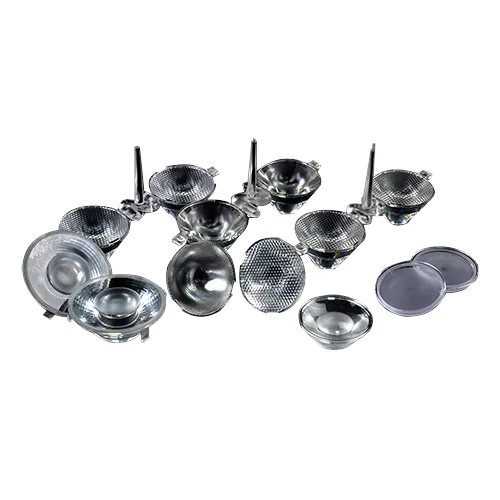
ATRMOLD manufactures TIR lenses, Fresnel lenses, aspheric collimating lenses, magnifying lenses, and projection imaging components . From LED lighting optics to mini projector lenses, we combine in-house optical design with precision injection molding to deliver components that deliver consistent production performance.
💡
High Optical Efficiency
Optical-grade PMMA achieves ~92% transmittance. With AR coating, total system efficiency exceeds 95% for LED and projection applications.
📐
Low Distortion Design
Projection and imaging lenses are designed for<0.5% barrel distortion. Flat-field aspheric designs are available for document scanning and display applications.
🎯
Custom Beam Angle
TIR and Fresnel lenses support beam angles from 5° narrow spot to 120° wide flood. Custom illumination patterns are developed to meet your photometric requirements.
⚙️
Complex Surface Capability
Aspheric, TIR, and Fresnel surface profiles can be manufactured through precision injection molding.Diamond-turned tooling enables submicron groove and surface accuracy.
Imaging & Projection Optical Lens Products: Specifications at a Glance
| Product Type | Material | Key Optical Spec | Beam / Field | Wavelength | Application |
|---|---|---|---|---|---|
| LED TIR Collimating Lens | PMMA / PC | >92% Efficiency | 5°–60° Beam | 400–700nm | LED spot & Flood lighting |
| Aspheric Collimating Lens | PMMA / COP | λ/4 Wavefront | Custom NA | 400–1100nm | Laser & LED collimation |
| Fresnel Magnifying Lens | PMMA / PC | Low chromatic aberration | 1.5×–10× | 400–700nm | Magnifier, Reading aid, Display |
| Fresnel Projection Lens | PMMA | <1% Distortion | Custom throw ratio | 400–700nm | Projector, Overhead display |
| Light Guide & Diffuser Lens | PMMA / PC | Uniform illumination | Custom diffusion | 400–700nm | Backlight, signage, panel |
| Mini Projector Imaging Lens | PMMA | <0.5% Distortion | Custom throw ratio | 400–700nm | Pico projector, Smart display |
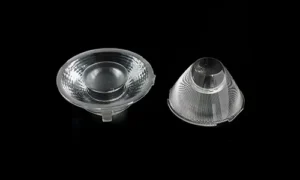
LED TIR Collimating Lens
Total Internal Reflection lenses for LED spotlights, downlights, and track lighting. Beam angle 5°–60°. Over 92% optical efficiency. Custom photometric output available.
- 5°–60° beam
- 92% efficiency
- Substrates: PMMA / PC
Applications:LED spotlight · Track light · Architectural lighting
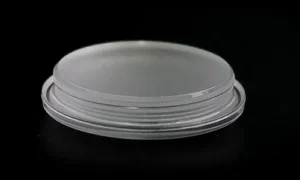
Fresnel Projection Lens
Large-format Fresnel lenses for overhead projectors, rear-projection displays, and solar concentrations. Custom pitch, blaze angle, and throw ratio.
- Custom throw ratio
- <1% Distortion
- Substrate: PMMA
Applications: Overhead projector · Rear projection · Solar concentrator
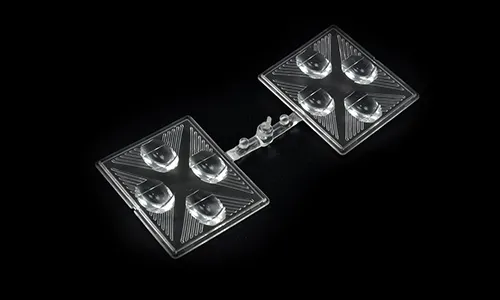
Aspheric Collimating Lens
Precision aspheric lenses for laser and LED beam collimation. Low wavefront error (λ/4), custom numerical aperture, with PMMA or COP material options.
- λ/4 wavefront
- Custom NA
- Substrates: PMMA / PC
Applications: Laser collimation · LED optics · Fiber coupling
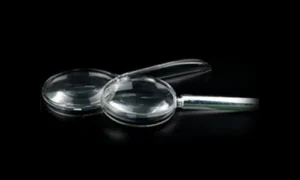
Fresnel Magnifying Lens
Flat Fresnel magnifying lenses for reading aids, map magnifiers, and display magnification. Custom magnification from 1.5× to 10×. Low chromatic aberration. PMMA material available.
- 1.5×–10× magnification
- Low aberration
- PMMA
Applications: Reading magnifier · Map reader · Display magnification
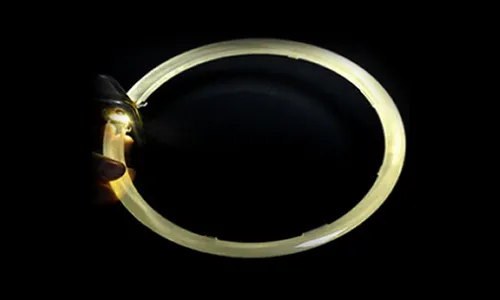
Light Guide & Diffuser Lens
Light guide plates and diffuser lenses for uniform area illumination. Custom diffusion angle and surface microstructure design optimize illumination uniformity.
- Uniform illumination
- Custom diffusion
- PMMA / PC
Applications: Backlight · Signage · Panel illumination
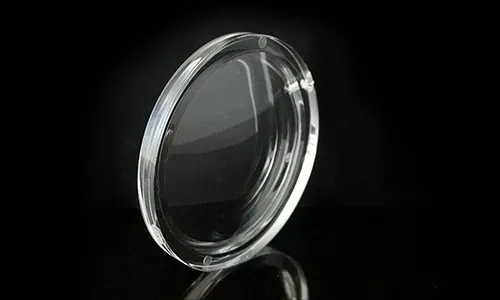
Mini & Pico Projector Lens
Compact imaging lens systems for mini and pico projectors. Low distortion across the full image field, custom throw ratio, and high-transmittance PMMA material.
- <0.5% distortion
- Custom throw ratio
- PMMA
Applications: Pico projector · Smart display · Portable cinema
Need a non-standard imaging or projection optical component?
Choosing the Right Material for Imaging & Projection Lenses
LED lighting or projection requiring maximum transmittance?
Outdoor luminaires, high temperatures, or impact exposure?
Precision display imaging requiring low birefringence?
Not sure? Share your optical performance requirements.
AR coatings increase total lens efficiency to >95%. Custom AR bandpass coatings available for specific wavelength optimization. Read: PMMA vs PC vs COP Material Guide →
From Optical Design to Production: Our 6-Step Imaging Lens Process
01
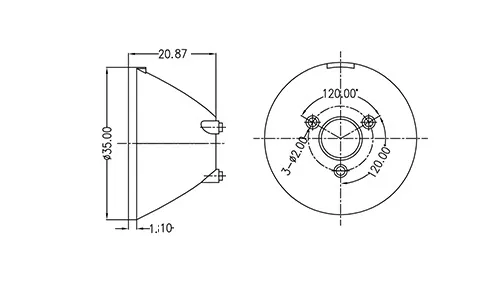
Optical Requirements Review
Submit beam angle targets, throw ratio, uniformity spec, distortion budget, or magnification factor. Engineering review within 24 hours.
Response: 24 Hours
02
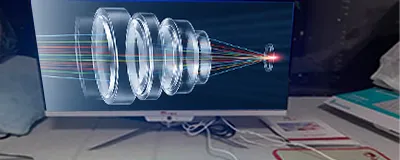
Optical Design & Simulation
Ray tracing in Zemax or Code V through our optical design engineering team. TIR profile optimization, Fresnel zone layout, or aspheric surface coefficients from your photometric targets.
Duration: 3–7 Days
03
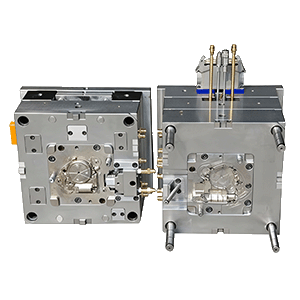
Diamond-Turned Mold Tooling
TIR and Fresnel molds use single-point diamond turning (SPDT) for groove accuracy. Mirror-polished aspheric molds for imaging lenses. Full mold ownership to customer.
Lead time: 6–8 Weeks
04
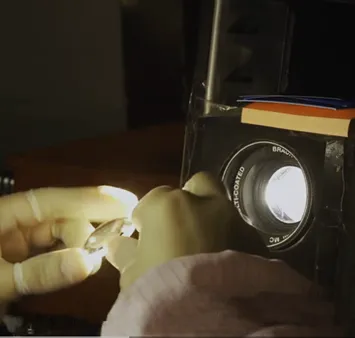
First Article Optical Testing
Beam angle (goniometer), efficiency (integrating sphere), MTF for imaging lenses, uniformity mapping for flood optics. Full report provided.
100–300 Pieces
05
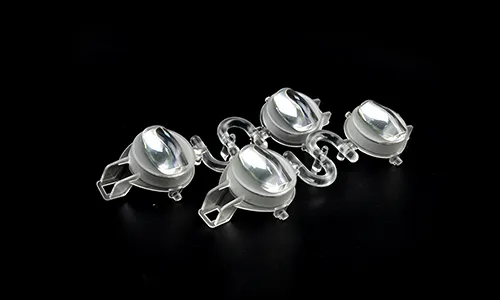
System Integration & Approval
Customer integrates samples into luminaire, projector, or optical system. Free mold modifications if first-article performance targets are not achieved.
Modification: 2–3 weeks
06
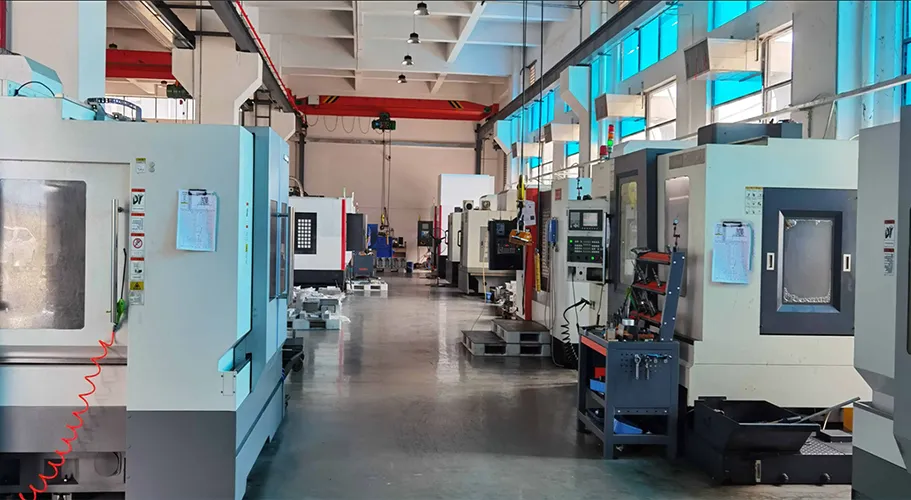
Production & Global Delivery
Validated process parameters with batch efficiency and transmittance testing. Cleanroom packaging. Global delivery for LED, projection, and display OEM customers.
Production: 2–3 Weeks
Why LED and Projection OEMs Choose ATRMOLD for Optical Components
🏆
ISO 9001:2015 Certified
Full quality management covering optical design, mold development, injection molding, efficiency testing, and delivery traceability for every project.
💡
In-House Optical Design
TIR, Fresnel, aspheric, and imaging lens design using Zemax OpticStudio. Full simulation reports and photometric data before tooling commitment.
✅
RoHS & REACH Compliant
All materials comply with EU LED lighting and electronics regulations. Full compliance documentation with every shipment.
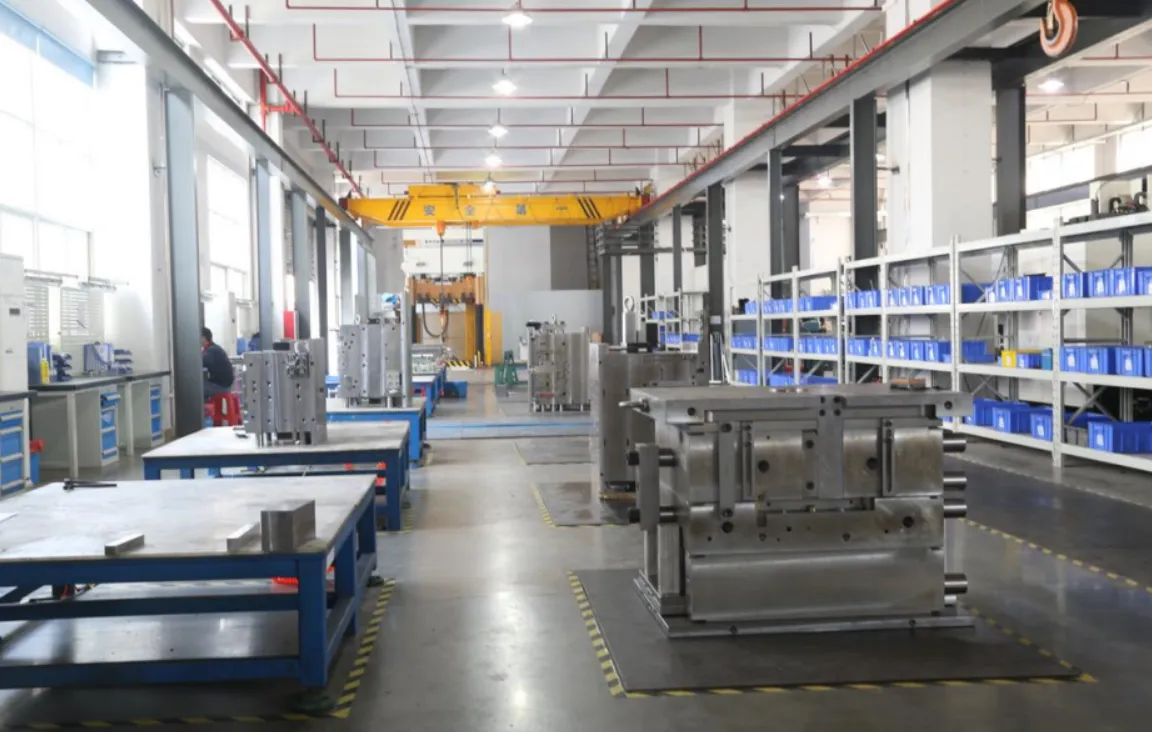
Precision Mold Tooling for Imaging Optics
- Single-point diamond turning (SPDT) technology for TIR and Fresnel molds
- Mirror-polished S136 and NAK80 mold steel for aspheric imaging lenses
- ±0.001mm cavity accuracy for consistent optical performance
- In-house mold manufacturing with no outsourced tooling
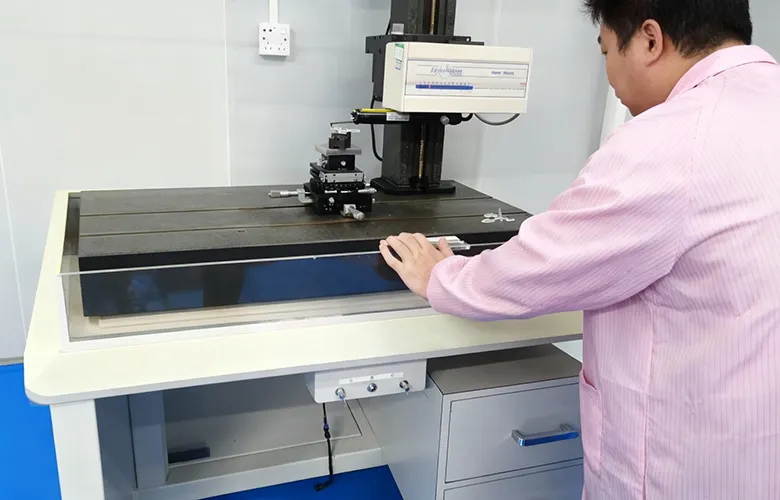
Optical Performance Testing
- Integrating sphere: total luminous flux and efficiency
- Goniometer: beam angle and intensity distribution
- UV-Vis spectrophotometer: transmittance per wavelength
- MTF bench: modulation transfer function for imaging lenses
“We needed TIR lenses with a 15° beam angle for a commercial LED track lighting system — a tight spec our previous supplier could not hold in production. ATRMOLD redesigned the TIR profile and production samples hit 14.8° ±0.3° consistently. We have been running 80,000 pieces per month without a single beam angle complaint.”
Procurement Manager — Commercial LED Lighting Manufacturer, Netherlands
Imaging & Projection Lenses Across Six Application Areas
Commercial LED Lighting
TIR collimating lenses for track lights, downlights, and spotlights. Custom beam angles for retail, hospitality, museum, and architectural lighting.
Projection & Display Systems
Fresnel and imaging lenses for overhead projectors, rear-projection displays, and digital signage. Custom throw ratios and image formats.
Magnification & Optical Aids
Fresnel magnifying lenses for reading aids, map magnifiers, and inspection tools. Custom magnification factor and lens sizes.
Industrial Inspection Lighting
Diffuser and collimating lenses for machine vision illumination. Uniform flat-field lighting for defect detection and dimensional measurement.
Horticultural & Solar Systems
Large-format Fresnel concentrating lenses for solar energy and horticultural grow lighting. Custom concentration ratios and focal lengths.
Portable Projection Devices
Compact imaging lens systems for pico projectors, smart glasses modules, and portable display devices. Lightweight PMMA construction with custom throw ratios.
Related Services & Products
Start Your Imaging or Projection Lens Project
TIR lenses, Fresnel optics, aspheric collimators, or magnifying lenses—tell us your optical requirements, and we will respond within 24 hours.
Send Your Drawing or Spec
Lens drawing, photometric target, or system requirement. Free optical design review and quote within 24 hours.
Describe Your Optical System
Tell us your target beam angle, throw ratio, wavelength, and production volume. We will design the lens from your requirements.
WhatsApp Direct
Quick questions about TIR design options, Fresnel pitch, or sample availability — message our engineering team directly.
✓
Free Optical Design Review
✓
Simulation Report Before Tooling
✓
No Commitment to Start